Showing posts with label military history. Show all posts

Tuesday, August 06, 2013

A beginner's bibliography of the Napoleonic Wars

While at RWA in Atlanta last month, I gave a talk titled "Beyond Trafalgar and Waterloo: Your Hero's Military History." at the Beau Monde Regency Special Interest Chapter's mini-conference. My goal was to help writers go beyond the most obvious battles and tropes when writing a military hero. (Or heroine! One of these days I'm going to finish that manuscript with a young lady disguised as a boy in the navy.) In my handouts I included a list of what I think are some of the best sources for writers who'd like to write a Napoleonic-era military or naval hero but don't know where to begin.

It occurred to me that interest in such a list might go beyond the thirty or so people who were in the room that day, so here it is. This isn't even remotely intended as a comprehensive bibliography--just a good jumping-off point if you're a writer who'd like to add more richness to your military hero's backstory or a reader who enjoys romances with military heroes or books and movies like the Sharpe series and wants to learn more about the reality behind your favorite heroes. (Note that several of these books are out-of-print and sufficiently expensive that I've only included their buy links so you'll have all the info you need to track them down via interlibrary loan.)


Adkin, Mark. The Sharpe Companion: A Detailed Historicaland Military Guide to Bernard Cornwell’s Bestselling Series of Sharpe Novels. Designed as companion pieces for the Sharpe series, this book and the one above contain a wealth of detail about the lives and campaigns of British soldiers of the era.

Barbero, Alessandro. The Battle: A New History ofWaterloo. A page-turner of an introduction to the battle.

Brett-James, Antony. Life in Wellington’s Army. A book about every aspect of a soldier’s life but battle, this is a wonderful source for understanding how your hero would’ve lived while on campaign.

Burnham, Robert & Ron McGuigan. The British Armyagainst Napoleon: Facts, Lists, and Trivia 1805-1815. Something of an encyclopedia of the British army, full of useful details such as soldiers’ and officers’ pay, cost of commissions, rations, punishments for various offenses, casualty figures, etc.

Crumplin, Michael. Men of Steel: Surgery in theNapoleonic Wars. Want to write a surgeon hero, or have your hero wounded and in need of surgical care? This book is for you.

Elting, John. Swords Around a Throne: Napoleon’s Grande Armée. Focused on the French, but it manages to be both encyclopedic and fascinating about what made an army of the era tick.

Foulkes, Nick. Dancing into Battle: A Social History of theBattle of Waterloo. Worthwhile for romance writers for its focus on the social and cultural milieu.

Haythornthwaite, Philip. Nelson’s Navy. A short, well-illustrated introduction to naval life.

Lieven, D.C.B. Russia Against Napoleon: The True Story ofthe Campaigns of War and Peace. Not directly relevant to an author focused on British characters, but a fascinating and thought-provoking view of all the major powers involved in the wars.

Longford, Elizabeth. Wellington: The Years of theSword. My favorite of the many Wellington biographies I’ve read.

Michael O’Meara Books Ltd. Ships’ Miscellany: A Guide tothe Royal Navy of Jack Aubrey. A good introductory source on the ships of the era and the life of a sailor.

Morgan, Matthew. Wellington’s Victories: A Guide to Sharpe’sArmy 1797-1815. Yes, another guide for readers of a fiction series, but they tend to make extremely useful and readable introductions.

Park, S.J. and G.F. Nafziger. The British Military: ItsSystem and Organization 1803-1815. Bernard Cornwell pointed me to this one when I met him at the Surrey Writers’ Conference a few years back. It tells you where every regiment was during the time frame covered—invaluable in finding a regimental home for your hero.

Whipple, A.B.C.  Fighting Sail. It’s a Time-Life book—which means it’s fairly detailed and full of illustrations, and it doesn’t expect you to come into the book with an expert’s knowledge. Focuses almost exclusively on Nelson’s life and campaigns.


Saturday, July 06, 2013

The Battle of Vittoria

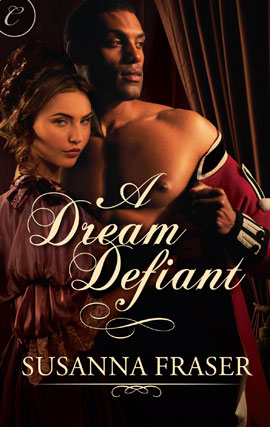
My July 29 release, A Dream Defiant, takes place in the immediate aftermath of the Battle of Vittoria during the Peninsular War (i.e. the main British land campaign of the Napoleonic Wars, during which an Anglo-Portuguese force under Wellington's command gradually drove the French from the Iberian Peninsula.

Vittoria took place late in the war, on June 21, 1813. Prior to 1813, while Wellington's forces won practically every battle they fought, they didn't have the numbers to gain a total victory until after 1812, when Napoleon's disastrous invasion of Russia forced him to pull troops from Spain.

The town of Vitoria (note--not a typo. I'm using the modern spelling for the town and the older one used by the British at the time for the battle) is in Basque country in the northeastern part of Spain, which by itself tells you that Wellington's army had almost succeeded in driving the French back to their own borders. In fact, by this point Joseph Bonaparte, Napoleon's older brother whom he'd installed as King of Spain, had abandoned Madrid and was with the French army--with a formidable baggage train of royal riches and treasures looted from Madrid along with the usual money and gear you'd expect an army to be transporting. Its estimated value was one million pounds in 1813 money. While it's difficult to accurately convert currency values from two centuries ago, think $150,000,000 or so. In other words, a lot.

I won't go into details of the battle, though I'd be happy to point anyone who's interested to sources. Suffice it to say it turned into a rout. The French fled the field, in their haste abandoning that baggage train of treasure.

Wellington, of course, would've preferred that his soldiers pursue their defeated enemy. Instead, discipline temporarily collapsed, and they stopped to plunder--along with not a few French soldiers who wanted to claim a few treasures of their own before catching up with their units.

And so not the battle but its aftermath became the springboard of my story. My hero, Elijah Cameron, comes upon one of his men in a lethal struggle with a French soldier for a ruby necklace. Elijah drives the Frenchman away, but it's too late for his friend--who entrusts the necklace to Elijah to give to his widow, Rose Merrifield, so she can use it to return to England and have the life she's always dreamed of--buying an inn in her home village and using her cooking skill to make it a place where all the travelers on the Great North Road will want to linger over their dinners. But once rumors of the treasure get out, Rose isn't safe from men who'd use her and the necklace to their own ends. And the only one she trusts to protect her is Elijah...

Tuesday, February 08, 2011

Historical TMI

It has occurred to me that, should I happen to meet certain historical figures in the afterlife, our conversations might prove a bit awkward.

It’s the TMI factor, you see. What do you say to a man when you’ve seen the love letters he sent to his wife in the early days of their marriage? Letters which contain such revealing passages as:

"Come soon; I warn you, if you delay, you will find me ill. Fatigue and your absence are too much. You are coming, aren't you? You are going to be here beside me, in my arms, on my breast, on my mouth? Take wing and come, come! A kiss on your heart, and one much lower down, much lower!"

Well, all right, then. Good to know this guy--we’ll call him General X--could be so generous and amorous when his passions were engaged.

And then there’s General Y. A more circumspect soul, he left us no correspondence allowing us to deduce just what he planned to do to his woman of the moment next time he got her into bed. And when one of his brothers was being a bit too scandalous in his womanizing, General Y complained in a letter to another brother that he wished their errant sibling was ”castrated, or that he would like other people attend to his business & perform too. It is lamentable to see Talents & character & advantages such as he possesses thrown away upon Whoring.”

Though don’t let that fool you into thinking General Y was any kind of model of chastity. Among other things, he had at least two mistresses in common with General X, one of whom was generous enough to the salacious curiosity of posterity to publicly state that Y was better in bed.


And who are our amorous generals? X is Napoleon and Y is Wellington--and speaking as someone who’s read stacks of biographies of both, it’s amazing how much of their personalities and voices come through in those two brief quotes above.


Do you know any good historical TMI? And would you prefer Napoleon or Wellington for your Valentine? (I’m on Team Wellington all the way--he’s much better-looking by my tastes, I like cool-headed, reserved, snarky personalities like his, and on the whole I prefer my Secret Historical Boyfriends to NOT try to take over the world.)


Susanna Fraser is the author of The Sergeant's Lady (available now) and A Marriage of Inconvenience (April 11, 2011). The lovely lady in the picture is NOT her, but the French actress Mademoiselle George, our informant on the relative sexual prowess of Napoleon and Wellington. You can visit Susanna's website here.

Sunday, February 06, 2011

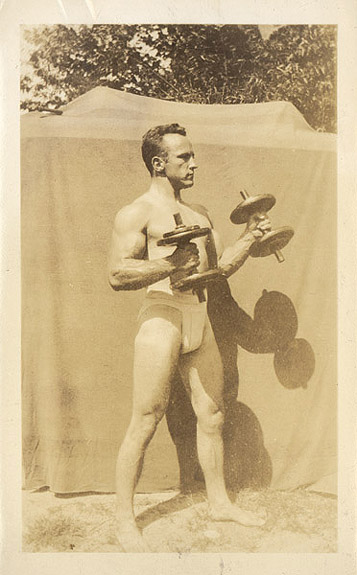
History of Men's Underwear - Part Two

Catch up: Read The History of Men's Underpants - Part One.


Now, where were we? Oh yes. The Middle Ages.Where the codpiece had to be invented to prevent one's tackle from drifting around in the breeze and men "started" to *cough* exaggerate--just a little--what they had...

Some people, and I know this is hard to believe, had some space left over in their codpieces, so they'd keep objects in there too. Handy! Or something-y.

Of course, they stopped exaggerating... It's not like they do it now...

As the trousers got gradually longer,the undergarments grew with them. They resembled the breeches in shape and size, although they were made with a softer material such as silk, cotton or linen. This was important if you were wearing scratchy wool next to the skin. You find, too that underwear was ditched by many in favour of the coattails of the long shirts. Men would pull the tails between their legs and wrap their family jewels in the shirt. I'm just glad I wasn't a washerwoman in the 18th century, that's all I can say.


With many thanks to Anteros - who has an informative post about Age of Sail underwear here.

What do you think spurred the invention of this contraption?

The bicycle, apparently. Men found that they needed a lot of support while riding it-- although you'd think they would have realised this with horses too...

It's sad that after 6000 years we come almost full circle and where we started with the loincloth, with the jockstrap we finish off with the loincloth.

It's always fascinating to write gay romance because of the wonders to be found under a man's overclothes. It's interesting that names are so difficult to pin down. Small clothes, underthings, underwear--all were considered too delicate to mention and a writer risks getting it wrong no matter what she chooses.

But here's to them all. To the braies, the strossers, the drawers, the jockstraps, the loincloths, the smallclothes, the boxer shorts, the codpiece, the hose. Here's to everything that wraps around that small difference between men and women--viva la difference!

Erastes
www.erastes.com
Erastes writes gay historicals, and her first book for Carina is "Muffled Drum" (set during the Austro Prussian War) and will be out in July 2011. It's full of soldiers, horses, angsty love drawers and many many buttons.


Thursday, December 09, 2010

Christmas Dinners with Wellington's Army

My first Carina release, The Sergeant's Lady, is set with the British army on the Iberian Peninsula in 1811-12. Though my story's timeline skips over Christmas, given that it's December now, I decided to make my inaugural post about how Wellington's army observed the holiday.


Christmas hadn't yet become the lavish production it is today even among those safe at home in Britain, but the officers of the army in the field entertained one another with the best dinners that could be obtained. In 1812 two turkeys formed the principal part of the holiday feast for Wellington and his guests, while one year a group of artillery officers had "soup, salt fish, roast beef, boiled beef, mutton, vegetables, etc., etc., and a remove of turkey, fowls, ham and tongues--afterwards pastry." After dinner they lived up to the hard-drinking standard of the times with toasts to "All absent friends, the King, the Prince Regent of Portugal, to England, to Lord Wellington, and the British Navy, to name only the principal toasts."

In 1810 some of the officers even had something that would've been all but unheard of in England at the time--a Christmas tree. As many of you may know, Christmas trees got their start as a German custom and didn't become generally popular in Britain or North America until the Victorian era a few decades later. But the British army of the Napoleonic era included a King's German Legion composed of Hanoverian troops (since at that point the King of England was also the Elector of Hanover, which is now part of Germany). And the officers of the KGL kept up German tradition and had a tree--a lemon tree, decorated all over with oranges and candles.

So much for the officers, but what about the enlisted men? We don't have as many records, because so much of our source material is officers' correspondence and diaries. But we know that in 1812 the colonel of Gordon Highlanders ordered his company commanders to "give their men as good dinners as they possibly can tomorrow...as it is Christmas Day," and Captain John Cooke of the 43rd Light Infantry provides the following description of Christmas Night, 1813:

Just before dark, while passing a corporal's picquet, an officer and myself stood for a few minutes, to contemplate a poor woman, who had brought her little pudding, and her child, from her distant quarters, to partake of it with her husband, by the side of a small fire kindled under a tree.

For all of these details I'm indebted to Antony Brett-James' Life in Wellington's Army. If you're writing about the Peninsular War, or even just writing a hero with the war in his past, it's well worth getting from interlibrary loan or hunting down a used copy (generally cheaper on abebooks than Amazon, incidentally).