Showing posts with label gay historical romance. Show all posts

Monday, September 03, 2012

Strawberry and Coffee Creams


You know when you have one of those massive barrels of sweets – usually at Christmas over here in the UK. Quality Street’s the nation’s favourite and they have a great selection of sweets in them. Nut clusters, caramel cups, toffees, fudge etc etc.
And then Christmas is over, and you are left with a handful of sweets that no-one wants.  Orange, Strawberry and COFFEE creams. BLEURGHK.
Now this is obviously only indicative of what my family like – I’m sure there are lots of people who love these flavours, but it does seem to be coffee that is the least favourite, if the brilliant Revels Roulette adverts are anything to go on.
Revels Russian Roulette (Longer Version)


And where am I going with this??? Well, I don't know if you know but I run "Speak Its Name" which is the only review site that concentrates on gay historical fiction and although I have choice as to what books I read for pleasure, when it comes to Speak its Name I have to read a lot of eras that really make me go meh, even before I've opened the book and it's not really fair on the book. I’ve noticed a worrying trend recently, that I tend to leave the westerns till last and right now, out of 40 or so books to be reviewed, more than half of them are westerns.  I hate to say it, but I’ve found that westerns are my coffee creams.
And I’m sorry about this.  I don’t think there are more westerns written than any other gay historical — although, this might be the case, I’ve not done a fact-finding mission to find out — it’s just that, because I’m not mad on the genre, I tend to put them to one side and then I end up with a ton of them to do at once–which doesn’t do anything for my temper or the balance of the site.
I don’t know when I stopped being a fan of the western, either. I used to love them as a child and even went to the cinema to catch classics such as True Grit, and I was such a huge fan of Rawhide (Gil Favour for the win) but now I tend to avoid most of them, except for Slashy goodness such as The Searchers.  (Yes, really.  If you don’t believe me, go and watch it again, John Wayne’s character is most certainly bisexual at the very least.) The very worst western and one that will make me run screaming from the sofa is anything Mexican. Don’t ask me why. I like coffee to drink, and I LOVE strawberries and oranges so nothing really makes sense.
And my aversion to western gay fiction  makes no sense either because there’s been a good few that I’ve really enjoyed.  Mark Probst’s “The Filly” is a beautifully written restrained piece of fiction, Jamie Craig’s “Those Who Cherish” was highly enjoyable, and Kiernan Kelly’s “In Bear Country” duet of books have everything necessary for a reader, adventure, romance and a good historical feel. I don't think that at the moment, Carina Press has any gay historical westerns - that's odd.
So I don’t know why I’ve got this westernphobia. Perhaps it’s because for every good book, there’s three not so stellar with more cliches than tumbleweeds, but then that’s true of every kind of fiction really isn’t it?
Perhaps in future for reviews I’ll take a tip from the Russian Roulette advert and just pick a book blindfold and not allow myself to push the least favourites to the back of the drawer.
Is there any genre you find yourself avoiding?  Is there any logical reason for it (unlike me!)

Wednesday, November 02, 2011

A Bluffer's Guide to Gay Historicals

Top facts:

* Once non-existent, the genre stands proudly, and there are hundreds and hundreds of titles to choose from in every possible era from cavemen to WW2
* Covers. Getting better and better every year, we've gone from naked men in a frozen pond to covers with ships and everything!
* Writers of the genre here at Carina: 
ErastesJosh LanyonAleksandr VoinovFae SutherlandBonnie DeeAlex Beecroft, Charlie Cochrane (the latter two have books coming out in 2012)


In a nutshell

* There's still not enough of it, for a start. Yes, I'm never satisfied...
* Some Gay Historicals address the very real problems of being gay in a time when it wasn't just unacceptable, it was reviled and illegal. (Basically after Christianity kicked in) However, there were times when man on man love wasn't just acceptable, it was a normal part of everyday life. (The Greeks had a word for it.)
* Thankfully, due to pronouns there are few books with those classic romance titles such as "The Belgian Captain's Depraved Toyboy." (With thanks to the Random Romance Title Generator)

The Heroes


Not too different from the heroes in other historical romances. They are generally aristocratic (tall and handsome goes without saying - plus they are ALWAYS - always hung like horses, this is the law.)

So, create your character: Rich, check. Commanding, check. Handsome, check. Package of unusual size. Check and double check. OK, you can stop checking now.

The, er, OTHER Heroes

Now here you can play around a little. You can either make your other hero a match for your arrogant alpha in every sense of the word (and sit back and watch those sparks fly and those buttons go flying (gotta have flying buttons, more later) OR you can create a sensitive little soul. A downtrodden artist, perhaps, or an impoverished tutor. A kidnapped slave or an abused and rescued young man. As long as you get a vast gulf between your alpha and your omega, it doesn't really matter. Any excuse to make that boy cry his little heart out because the rough tough alpha doesn't know how to handle him. Or rather - he doesn't know how to handle his feelings - he knows how to handle him all right. (hur hur) The important thing is the desecration of innocence - but don't worry. No matter how nasty the alpha is, your sensitive soul will fall in love with him as he tops from the bottom.

The best bit about writing gay historicals
* Buttons
. Oh GOD the buttons. I've coined the term breeches ripper before, but for me waistcoat ripping is far more exciting. Also cravats. You can have a LOT of fun with cravats.
* UST. (No, no, not thereUnresolved SexualTension. Buckets and buckets of it. "I'm homosexual!++ Argh! God he's pretty. I wonder if he's homosexual too? How can I let him know? What if he's not? All right... so he is - he's sleeping with Lord [Whossit] - how can I get him?"A writer of gay historicals have immense fun torturing her characters - making every glance count, and when one's passing the port (to the left, of course) at dinner, fingertips are just bound to brush against each other.
It's much easier to get men together on a day-to-day basis. Whereas a hetero historical writer will have to write about dances, and chaperones and perhaps elopements men can simply hang out with each other, ride in each other's carriages (and no, that's not a euphemism!) without anyone fainting or ruining anyone's reputation. Of course it's pretty difficult to get them into sexual situation, but that's another post...

The best bit about reading gay historicals* Buttons! Ok, Is it just me and the buttons?
* Appreciating that the author knows exactly what the difference is between a sailor's whipping and a double fisherman but that you don't need to know anything as silly as long as the hero gets tied up.
* Sponge baths.
* The membrum virilus! Members, yards, rods, poles, perches, arbor vitae, gaying instrument. (yes, really.)

Top tip: beige...biscuit...blasé bleeding anachronisms

Check check check. You may think that it's all right to say your hero's breeches are beige but it wasn't so and any eagle eyed reader will Mock You. They will, however realise if you are trying and make a small slip-up, but they won't appreciate sloppy (or no) research, modern day speech patterns and contemporary men in fancy dress.

What not to say

* “Gad, that's an attractive ass!”

Over to you...

* What gay historicals would you like to see?
* What cliches are you sick of?
* What do you think of the covers these days?
* Anything else?

And if you are interested in finding out more: (and in a more sensible fashion)

Speak Its Name has The Definitive List of Gay Historical fiction.
The Macaronis: Fiction out of the Closet


Erastes is the penname of a female author who lives in Norfolk, UK with 3 demanding cats and a mad dog. Her new novella, "A Brush With darkness" a gay romance set in 19th century Florence is coming to Carina in March 2012. Check her website for her non-Carina titles www.erastes.com

Thursday, October 27, 2011

Magical Writing -- Magical Living

Susan Edwards ~ Myth, Magic & Wonder

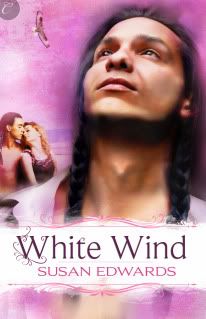
When I first started writing historical romances, there wasn’t any magic or paranormal in my stories. After all, I wrote straight historicals. Right? Wrong! In keeping with Native American elements and beliefs, my hero’s mother had the gift of sight (White Wind Nov 2011). Okay, that was part of their world, this connection to the land, animals and spirits. In looking back, my second book also had this aspect and my third.... See a theme growing here?
In each book, I was pulling in more of the Native American spiritual/mythology into a non-paranormal world. Up to this point, I still hadn’t really considered those type of traits or gifts as magical or paranormal.


But a funny thing started to happen by the time I was writing my tenth and eleventh book. I was now ACTIVELY seeking more of the mystical elements to include in my world yet what I used still fit into the historical/Native American world. I was just using more of it, going deeper with it and expanding it. My books were immersed in paranormal and yep, might as well say it, magic! I was towing a fine line between Native American and Paranormal--and loving every minute of it for it was truly a creative process.

By the time I finished book eleven, I was hooked. I loved what I was doing within my boundaries and now I wanted to really write using paranormal and magic freely. I did so with book twelve, Summer of the Eagle (April 2012) which features a race of people who could DO cool things.

What changed from my early books? Well, the internet certainly opened more doors and with it, more possibilities! Then came the world of internet and the wealth of information at my fingertips! Suddenly I wasn’t just writing about characters in a historical setting but about the magic of living with an open mind to possibilities.

And possibilities is where I believe magic truly lies. The magic in my writing spilled over into my life as I discovered the magic that surrounds each of us, each day if we only open our eyes and mind.
Don’t believe me? Go for a walk and don’t just look at your neighbor’s houses or cars. Focus in on the beauty of the neighborhood trees, the flowers, the tiny blooms we seldom pay attention too. Lift your eyes as you walk to your car from the asphalt to the sky. Maybe you’ll see the faint shape of the moon looking down at you.
Spend a few moments gazing out your kitchen window. Can you see the birds perched on a tree or bush? How about that tiny hummingbird sitting on that very thin branch? What about the fact that we wake up to a new, bright day. Everyday. And that new day is filled with possibilities: a caring word, a child’s hug and kiss, a long awaited phone call (The Call)? So much is possible yet we seldom give it thought. The freedom to just be.

And if you are a writer, how about the magic of sitting down at your computer to write, doing something that we love (even if it is work at times). We create worlds that whether or not there is magic or paranormal elements, there certainly is magic. Connecting with even one reader in a meaningful way (even to just give that reader time away from the mundane world) is magic. And in the true style of connecting back to the Native American world that I love, I bring you back full circle: to your books and mine and the magic they contain.

So even if you do not write in the paranormal or magical genre, you have the chance to write magically. And if you are not a writer, you can live magically. Smile at a stranger, offer a few kind words. Who knows, you might bring magic into the lives of others. And you know what? It just keeps going. The magic we call life.

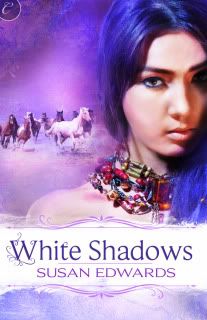
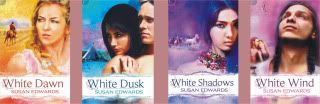
And for me, there is another bit of "magic" in seeing my books return to life (and to readers who have been asking for them) in the form of E-Books.  I've lived through the magical process of seeing my books republished including new covers!  Talk about magical feelings!  I love the new covers, and the new look, the new life that has been breathed into this series.

What’s magical about your life? Your writing? If you could do anything, be anything, write anything, what would it be, and why?  What is magical about it to you? Inquiring minds want to know <g>.

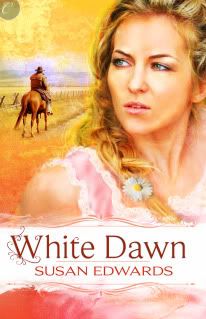
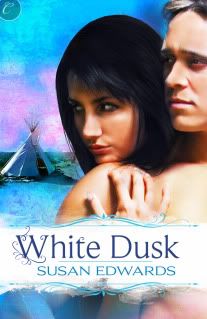
PRE-ORDER NOW White Dawn, White Dusk, White Shadows and White Wind.  Available November 21 2011  Carina Press

Check out my website at http://susanedwards.com for updated news and excerpts along with a member only area for my readers. You can also sign up for my newsletter

Wednesday, October 19, 2011

Which time era do you avoid?


You know when you have one of those massive barrels of sweets – usually at Christmas over here in the UK. Quality Street’s the nation’s favourite and they have a great selection of sweets in them. Nut clusters, caramel cups, toffees, fudge etc etc.
And then Christmas is over, and you are left with a handful of sweets that no-one wants. Orange, Strawberry and COFFEE creams. BLEURGHK.
Now this is obviously only indicative of what my family like – I’m sure there are lots of people who love these flavours, but it does seem to be coffee that is the least favourite, if the brilliant Revels Roulette adverts are anything to go on.


And where am I going with this??? Well, as you probably know, or don't - I run a Gay Historical Review blog called "Speak Its Name and I have to review the books that I'm given, or are available. I don't have the luxury of saying "I don't like...." and pushing them back into the sweetie barrel, because that wouldn't be fair.
But I have found that I AM being unfair - and that about half the books I have to be reviewd are Westerns, and that's probably because I've been skipping the westerns in favour of other time eras. I hate to say it, but I’ve found that westerns are my coffee creams.
And I’m sorry about this. I don’t think there are more westerns written than any other gay historical — although, this might be the case, I’ve not done a fact-finding mission to find out — it’s just that, because I’m not mad on the genre, I tend to put them to one side and then I end up with a ton of them to do at once–which doesn’t do anything for my temper or the balance of the site.
I don’t know when I stopped being a fan of the western, either. I used to love them as a child and even went to the cinema to catch classics such as True Grit, and I was such a huge fan of Rawhide (Gil Favour for the win) but now I tend to avoid most of them, except for homoerotic goodness such as The Searchers. (Yes, really. If you don’t believe me, go and watch it again, John Wayne’s character is most certainly bisexual at the very least.)
The very worst western (for me) and one that will make me run screaming from the sofa is anything Mexican. Don’t ask me why. I like Mexico. I like Mexican food. I'm really fond of Speedy Gonzales. But give me a western set in Mexico and I bite the coffee cream in half and spit it out.
I like coffee to drink, and I LOVE strawberries and oranges so nothing really makes sense.
And my aversion to western gay fiction makes no sense either because there’s been a good few that I’ve really enjoyed. Mark Probst’s “The Filly” is a beautifully written restrained piece of fiction, Jamie Craig’s “Those Who Cherish” was highly enjoyable, and Kiernan Kelly’s “In Bear Country” duet of books have everything necessary for a reader, adventure, romance and a good historical feel.
So I don’t know why I’ve got this westernphobia. Perhaps it’s because for every good book, there’s three not so stellar with more cliches than tumbleweeds, but then that’s true of every kind of fiction really isn’t it?
Perhaps in future for reviews I’ll take a tip from the Russian Roulette advert and just pick a book blindfold and not allow myself to push the least favourites to the back of the drawer.
Is there any genre you find yourself avoiding? Is there any logical reason for it (unlike me!)
Erastes
Erastes writes gay historicals, and her first book for Carina is "Muffled Drum" (set during the Austro Prussian War) out now. Her second will be "A Brush with Darkness"
Neither of them are westerns.
www.erastes.com

Wednesday, August 03, 2011

Striking a Balance


Last week, there was held--in Milton Keynes, UK, the second annual meetup of authors who write GLBT Fiction. It started in 2010 with just 12 of us meeting up in Ely library, but this year we had writers coming from all over the UK and even one or two from Europe and America! Over 40 attendees for our second year, and we even had three male writers attending which was SO encouraging.

The website is here, for those who are interested. We are planning something even bigger next year, perhaps over 2 days. Stay tuned!

Anyway, the reason I've done a bit of seemingly off topic promo is to mention the panel I participated in. Alex Beecroft, Charlie Cochrane and I spoke on Gay Historical Fiction and some of the pitfalls that authors fall into when attempting the genre.

The pitfalls, however, aren't limited to writers of gay historical fiction, of course! This is my talk, and I hope you find it useful. If you are interested, the whole panel of all three talks is posted HERE.

So here's my segment - Striking a Balance.

I’m going to talk about balance, because sometimes I think writers have difficulty striking a balance when writing. not just historical either. It’s a Fine Line between THIS IS MY RESEARCH LET ME SHOW YOU IT – and just getting the details right.

Don’t get e wrong—you got to do the research. You’ve got to try your very best to get those details right. Readers are forgiving if they can see you’ve worked like stink, but have made one or two silly errors. In Muffled Drum I made a big thing of the Red Light District in Berlin – and too late too late two people pointed out that the street I mentioned was actually in Hamburg and not Berlin.

But readers will be less forgiving if it’s patently obvious that you haven’t even bothered to use Google to check the most basic of facts.

But you shouldn’t over do relating that research to the reader and it’s this that is a little unfair to the writer, because you are going to learn a LOT more than you’ll ever put in the book.

I have to reference Dan Brown here, who does—and i have to grit my teeth to say this—write a damned good page turner. I actually own all of his books, because they are like crack. But whereas he writes a racketing good read and I for one can’t wait to turn the page and find out what’s happening next, he lets himself down with his signature move of telling us everything about everything. I remember reading one of them, don’t know which…and it told you about the engine of the car he was driving and the type of plane he was on, down to –it seemed, every grommet and washer. I found myself flipping over pages of STUFF HE HAD TO TELL YOU BECAUSE BY GOD HE’D DONE THE RESEARCH AND YOU SHALL SHARE IT rather than simply absorbing some of the facts as the flavour of the book.

I got the impression that he was saying to the reader “Look, i slaved over this book. i did research about Russia and China and every conspiracy theory known to man. Look, I seriously worked hard. I spent hours in libraries. you need to see my research or you’ll think i just made it up!!!! It will all be wasted if I don’t write it all down!” and that’s not good, that’s not the message you want to give. I don’t want the author to intrude at all.

I can relate to this, and I felt much the same when I first started to write, but luckily my mother was around when I first started and she pointed out that we didn’t need to know every single detail and she went through and deleted many descriptive words and passages. After that I found it much easier. The trick to it for me was to walk across my own room and described how I did it. I left the sofa, walked past the tv and the dining table to the kitchen. What I didn’t do was to leave the Gillows sofa, walk across the Wilton carpet designed by XXXX in 1792 and the flat screen 32” plasma screen Sony TV (I wish) and into the bespoke B&Q kitchen stencilled with green and yellow flowers.

Modern books don’t do this (or at least they shouldn’t!) and so neither should historicals. Whether the chair is made my Chippendale or whoever doesn’t really matter. Unless it does, of course. If the story revolves around Chippendale and perhaps the theft of a chair made by him, or whether the provenance of the chair is IMPORTANT then that’s fine. But if the detail doesn’t add anything to the story — and in fact, as often happens (Dan, I’m looking at you) intrudes and distracts from the story — then leave it out.

It doesn’t mean that you can’t make the description lush and tangible. Alex, for example, particularly in her 18th century paranormal “Wages of Sin” WORKS magic with her details. How cloth feels, how candle light looks and smells (never forget the smells) what happens to wig powder when it rains. But none of it is infordumping. She is simply creating a real and entirely believeable and visual world that the 21st century reader isn’t familiar with. The details immerse the reader, so they are actually there, and they are participating in historical events rather than distancing the reader, and makingit more clear that they are simply reading a book.

A good beta is worth their weight in gold. A good beta (and not just one who will tell you how great you are!) will tell you if you’ve turned into Dan Brown and you are oversharing that research.

The depressing fact of life is, that 99 percent of the research you will do for your book will (should!!) never appear on the pages of your book, but you can’t skip that research because it will make your book and more 3-dimensional, and in response to that, more enjoyable to read.

Friday, July 08, 2011

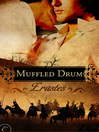
Muffled Drum is out!

War.

The clash of swords, the roar of canon, the scream of horses--war is terrible, and exciting. It's a great subject for a novel, because it adds instant conflict and the author doesn't have to work too hard to make Bad Things happen to their protagonists.

I've based one of my other books around a war too--Transgressions--which is set during the English Civil War. But with both Muffled Drum and with Transgressions I am afraid I cheat rather a lot. Instead of taking the Bernard Cornwell/Sharpe option, and meticulously describing each battle, I tend to skirt around most of the conflicts.

In Muffled Drum I deal with the morning before the battle of Gitschin, where Mathias and Rudolph make their final plans to run away together, and then the aftermath of the battle--because we all know that if someone says "see you after the battle" something is bound to go wrong!

The Austro-Prussian war actually only lasted for seven short weeks from June to August 1866 but was rather bloody, with over 100,000 killed. So my protagonists were pretty lucky to get out when they did, I think.

The main theme of the book is amnesia--a tried and tested literary trope, of course. But I hope that I deal with it as realistically as I can. My father has Alzheimer's so loss of memory is rather close to my heart. Of course, there's a difference between memory loss due to a blow to the head, and Alzheimer's but I think--dealing with my Dad daily, I can understand some of Mathias' grief that the man he loves has seemingly gone--maybe forever.

This is also the first book I've written that's not had its core in England,and that was a bit of a challenge. It's easy enough to write about The Grand Tour because those paths have been trodden by many a diarist and many, many novels, but to write about 19th century Bohemia? Luckily it didn't seem to have changed a huge amount. Much of what I write about on the road trip is modern day Czechoslovakia and thank goodness for Google Earth and Google Maps! I was able to zoom right in to show me what the landscape and surroundings were like. I could even "ride along the road"in the same route as Rudolph and Mathias. Bohemia Nothing at all like the English countryside, that's for sure.

It was very interesting for me to discover new places and new areas of research.

I hope that--if you try the book--you'll like it, and please do let me know.

I'll give one copy to one commenter, and will announce the winner on this blog on the 10th July.

In the meantime, here's a snippet and the book blurb.

Bohemia, 1866

They met in a port-side tavern, their lust-filled moments stolen from days of marching and madness. After eighteen months, Captain Rudolph von Ratzlaff and First Lieutenant Mathias Hofmann have decided to run away from everything they hold dear. Resigning their commissions is social suicide, but there's no other choice. Someone will eventually see Rudolph's partiality toward Mathias.

Now their plans have gone horribly awry... When Mathias goes to Rudolph's tent after their last battle, his lover looks at him without a hint of recognition. Mathias can hardly believe the man he knew is gone. He wants to fill in so many of Rudolph's missing memories, but the doctor says a shock could result in permanent damage. The pain of seeing Rudolph on a daily basis, when Rudolph doesn't remember their love, is excruciating. Now Mathias must decide whether he wants to fight for the man he loves or forget him completely...

----------------------
“Ernst, my dear, dear, boy.” Rudolph took his free hand and shook it so hard that champagne slopped from Ernst’s glass onto the floor. “You look wonderful, just wonderful.”

Dumbfounded at Rudolph’s behavior, Ernst felt Rudolph slip his arm through his own and was unable to find a rejoinder as Rudolph led him aside and found an empty table.
He sat opposite his former lover, completely astounded at the warmth in Rudolph’s face. The last time they’d met—in fact the last several times, as their relationship had crashed toward a rocky end—Rudolph had been cool, accusing and downright unpleasant.

Rudolph had been appalled that someone had mentioned their relationship to him, someone Rudolph hadn’t known, and he’d taken Ernst to task about it, ranting and raving about the need for complete discretion. “It’s bad enough that you charge my account for your trinkets and then have them delivered to an address which is clearly neither mine, nor a more acceptable mistress’s, but now I find my generosity bandied around the gaming tables and clubs. I warned you, Ernst, more than once. I won’t have my family touched by this, and if you can’t keep your mouth shut then you and I will be through.”

Then had come the crash when Rudolph had heard of sub-leutnant Albert Krueger, a whirlwind affair of Ernst’s that he assumed Rudolph would never find out about. Somewhere—Ernst never found out where—the pretty but stupid Albert had boasted of a gold cigarette case Ernst had given him, and the gossip had reached Rudolph’s ears. That had been the final straw. Rudolph had broken with him entirely, refusing to see him or accept his letters, stopping the rent on his rooms and advising every merchant with a von Ratzlaff account that Herr Fetter’s credit was no longer backed by the von Ratzlaff fortune. Rudolph had cut him ever since, and—what was almost as bad—so had most of his friends and acquaintances, whether they were aware of the more intimate relationship or not.

It had taken Ernst a good long while to cultivate friends with sufficient height in society to allow him to penetrate occasions such as these. Now here was Rudolph, his face full of welcome, as if Ernst was the one person he longed to see over everyone else.

At an unaccustomed loss for words, Ernst let Rudolph take the lead. Rudolph leaned across the table, speaking with a low voice, but his face still full of pleasure. You look surprised to see me, and I don’t blame you—I wanted to write to let you know I was on my way back, believe me. You wouldn’t have been impressed with tales of mud, maggots and blood. Regimental life on the road is not a pleasant tale to relate by letter. And once I was on the road, on my way back—to you—I couldn’t trust anyone with a letter filled with what I wanted to say. A telegram simply wouldn’t have done. Say you forgive me for startling you.”

Ernst nodded, still dumbfounded.

--------------------
Erastes is the penname of a female author who lives near the Norfolk Broads in England. She writes gay historicals and short stories of many genres. A Lambda finalist in 2009, Erastes is the owner of Speak Its Name, the only review site that specialises in gay historical fiction. She has recently sold a second novella--as yet unnamed--to Carina, which will be released Spring 2012.

Find out about her writings at her website: www.erastes.com

Tuesday, April 05, 2011

The Gay Historical HEA


Whatever the era with historical heterosexual fiction, once the hero and heroine have been through the required conflict, warred with their parents, or their countries, found each other, lost each other, found each other again, blah blah blah, they can finally fall into each other's arms, get married, shack up and it is assumed that never a cross word will pass their lips and the happiness will begin.

But--what about two men in love? Writers of gay historicals have to somehow convince their readers that--despite most eras pre Stonewall/pre-Wolfenden being downright dangerous times to be gay--the characters in our books have chosen to take the risk, and wish to stay together come what may. Or that they've managed some way to be together which flies a little under the radar

But how best to do it?

Obviously, we know that there have been homosexual men since men were invented. I'm sure that Ug looked out of his cave one day and saw Ig waving quietly at him and he either lost all interest in dragging any females back to his cave, or realised why he didn't want to. It might not have been too worrisome for Ug and Ig to set up cave together, far away from everyone else, but when you move forwards in history a bit and the Church gets all "burn the unnaturals" it becomes a little harder for a writer of the genre to finish off a story in a neat and believable manner.

Despite the very real dangers for gay men (particularly from the Renaissance to the early 1970s, and depending on where you live, even up to today) there have always been men who have risked all, and there are a few well documented cases of men who have "got away with it."

Two couples who spring to mind are George Merrill and poet Edward Carpenter - and Ralph Hall & Montague Glover who were together for close to thirty years and fifty years respectively. If these four men managed the "Yours until death" endings, then we know that there must have been many others.

But it's still a knotty problem for a writer who wants to base his or her story in the past. Up until the beginning of the 19th century one could still be hanged for homosexual activity, and in fact in the first quarter of the 19th century, more men were hanged for homosexuality than for murder.

How have I dealt with it in my books? (look away if you don't want to be spoiled, but Happy Ever after/Happy for Now endings aren't really secret, are they?)

1. Standish. I dealt with it by simply not dealing with it. I got some criticism for this, as I used a Gone with the Wind kind of ending - and I left it squarely for the reader to decide whether or not the couple would have got back together. As to the practicalities of this, it wouldn't have been too difficult. Rafe was super rich, and it was this that had prevented him from being prosecuted in the first place--so he had that protection, and this, hopefully would have prevented any further problems for Ambrose. They intended to live in Rafe's estate in Wiltshire, far away from prying eyes and the madding crowd. And if things did get hot - they could have retreated back to the continent.

2. Transgressions. The couple are together at the end of the book. Again, I leave it to the reader to decide how they would progress in the five minutes after the book ended. David is a deserter from the King's Army--and Jonathan is a trusted interrogator in Cromwell's army. Not an easy future for them, to be sure.

3. Frost Fair. This was managed by having (similar to Standish) the two men enter into an employer/employee relationship--whereby Gideon becomes the valet to Joshua. This is a device used by many gay regencies and Victorians as the "gentleman's gentleman" had almost unrestricted access to his employer and it would have been easier to be alone together, particularly for men of different classes. Lee Rowan does this admirably in the book which is coincidentally called "Gentleman's Gentleman."

Other methods used: Many of Alex Beecroft's men are officers and gentlemen in the English Navy and thereby are even more under threat, for it is a hanging offence on ship as well as on land. Her (and Lee Rowan's sailors too) snatch what time they can when it's safe to do so, and are pretty much resigned to doing their duty and hoping that they stay on the same ship as each other. Joanne Soper-Cook's homosexual detective Raft "shares rooms" with Freddie, his paramour, and this--in more innocent times--was something that could be disguised as "two friends sharing the bills." No one remarks (and why should they?) when Mr Pip and Mr Pocket share rooms in Great Expectations, or Holmes and Watson do the same in the Holmes series. (although it gives the slash writers a field day!)

Charlie Cochrane uses this device in her Cambridge Fellows series. To all intents and purposes they (at the beginning of the series) share adjoining rooms, and later they move into a house together. Quite normal in those days. No one batted an eyelid!

The important thing is...you can use any method at all, but I feel it has to be believable. Sadly, I’ve read more than one story where the author just threw all realism to the winds and had their homosexual regency couple marry in church. It is true that in around 1810 -1813 there was a vicar --the Reverend John Church—who famously performed homosexual weddings, but of course they were anything but legitimate!

I have to say that I’m often envious of writers of heterosexual historical romance, because they can simply end a book by having the couple throw themselves at each other and promise to marry the other – and it is a challenge to find realistic solutions to the love that dared not stick its head above the parapet, but it can be done, with care!

Erastes
www.erastes.com


Erastes writes gay historicals, and her first book for Carina is "The Muffled Drum" (set during the Austro Prussian War) and will be out in July 2011. It's full of soldiers, horses, angsty love, drawers and many many buttons.

Sunday, March 06, 2011

Erastes--my path to publication


Here's the first in a series of themed posts that each author will be blogging on from time to time, and for those of you who are just starting out, or who think "Oh, I'll never get published," I hope these posts give you hope--and show you just how different everyone's story is.

I'd always wanted to write, ever since I was a kid I was scribbling stories or telling myself adventures while I lay in bed. Sadly, although I had an artistic and encouraging mother, I didn't have the best teachers and my stories were often derided for being over fanciful or inaccurate. I remember once writing a story about a man dying of breast cancer (because I had read there were 300 cases for men against about 30,000 for women) and my teacher simply put a big red cross through the entire thing saying it was nonsense. I also remember writing about a car journey and watching the rain slide upwards on the windows (something I watched often myself,probably due to the wind pressure outside or some such reason) and again I was branded as having written nonsense. So I...kind of stopped writing.

But I didn't stop reading, and that probably kept the creative juices going through my late teens, and 20's and 30's. Unbeknownst to me, it was all just damming up and waiting to be released. I'd tried to write a couple of times in the 90's--spurred on by my mother who was herself writing a book, but nothing gelled--each book I started seemed derivative and I didn't know WHAT I wanted to write about.

In July 2003--and I wish I knew the exact date, because it was THAT kind of epiphany--I was cruising the internet prior to the release of the latest Harry Potter book. I was looking for any information about Severus Snape, who was at the time my favourite character, and completely by accident (just as well I didn't have "safe search" turned on, or my life may have been very different) I stumbled across a fanfiction community called the Snape Fuh-Q-Fest. My jaw dropped onto the desk. There were stories here about Snape...having...romantic liaisons with just about everyone in the Harry Potter Universe.

I'd not had a sheltered upbringing, but I'd never heard of fanfiction, and I'd never considered gay fiction as anything to read--but that day, reading story after story, I knew that this was what I wanted to write. In a matter of weeks I had written a 60,000 word novella about what happeend to Lucius Malfoy whilst not on the page of The Goblet of Fire whilst keeping entirely in canon. It was fun! It was exhilerating! It was...entirely a waste of time!

I realised that I couldn't do anything with this book--and so immediately began started on an original novel. I had first thought about converting the fanfic, but it wouldn't work, so I plumped for my comfort zone--Regency--and Standish, a gay Regency was born.

The trouble was (and probably just as well, or I might not have started it) that I didn't check to see if anyone was publishing gay romances before I wrote it, and when I finished it, I soon found out that--no, no-one really was.

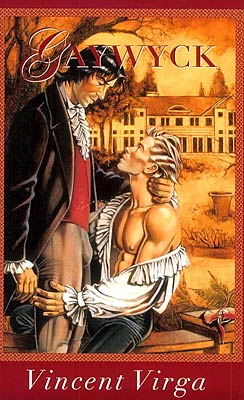
I received rejections. Many, many MANY rejections. Some of them very encouraging and many personal ones which were spirit lifting, but generally I got the feeling that no one really knew what to do with a gay regency. There had been two that I knew of, but one (Gaywyck) had been published more than 20 years previously and nothing since, and the only other one (The Price of Temptation) was by a small publisher who wasn't taking on anything new. I contacted Scott and Scott who were the only people that I could see who were (self) publishing gay romance (because no one else would take it on) and received the same story from them--they went it alone because there was no other choice. It was all a bit disheartening.

So I put the book to one side, got on with writing: more fanfic (I stayed writing fanfic for about four more years) and a second original novel. Another thing I did in that fallow time was to write original short stories for submission to online websites, magazines and short story anthologies. It was with one of these short stories that I got my first sale and the euphoria still remains with me. It was a great way to build up that mythical and increasingly important "platform." With short stories, at least people were reading my words, learning who I was and what I wrote--visiting my website and learning about me.

After about a year a friend emailed me and said that she'd spotted a couple of gay historicals on Amazon, and "wasn't it about time I started trying to sell Standish?" I did as she suggested and in no time at all I sold it to PD Publishing - a small but hugely professional press to whom I will be forever grateful. In November 2006 Standish was published and it spurred me on to finish that second novel and to send it out and send it out and send it out until that also sold to Perseus Books. Now I have three novels, a handful of novellas and over 20 short stories in print and I'm one of the newest acquisitions for Carina who will be publishing my newest novella "The Muffled Drum" in July 2011.

If there's any moral to this story, it's simply: DON'T GIVE UP.Don't ever give up. Listen to advice, read read read all the information you can, learn as much about the business as possible - but don't give up. Believe in yourself and beleive in your product, even if you are writing something that no one is selling right now - you never know what's around the corner. Who says it won't be the next big thing? Who on earth would have predicted that Gay Historical Romances would be on the shelves? Who could have possibly guessed that zombie/classic mashups would be big, eh?

Sunday, February 06, 2011

History of Men's Underwear - Part Two

Catch up: Read The History of Men's Underpants - Part One.


Now, where were we? Oh yes. The Middle Ages.Where the codpiece had to be invented to prevent one's tackle from drifting around in the breeze and men "started" to *cough* exaggerate--just a little--what they had...

Some people, and I know this is hard to believe, had some space left over in their codpieces, so they'd keep objects in there too. Handy! Or something-y.

Of course, they stopped exaggerating... It's not like they do it now...

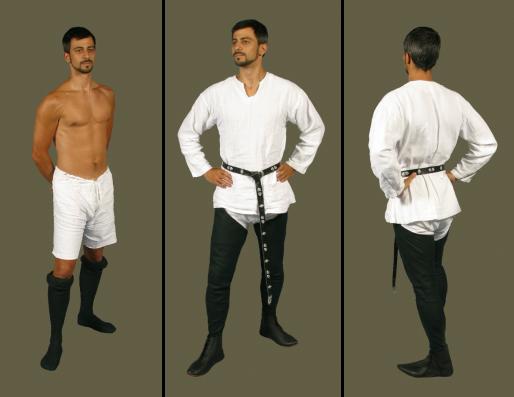
As the trousers got gradually longer,the undergarments grew with them. They resembled the breeches in shape and size, although they were made with a softer material such as silk, cotton or linen. This was important if you were wearing scratchy wool next to the skin. You find, too that underwear was ditched by many in favour of the coattails of the long shirts. Men would pull the tails between their legs and wrap their family jewels in the shirt. I'm just glad I wasn't a washerwoman in the 18th century, that's all I can say.


With many thanks to Anteros - who has an informative post about Age of Sail underwear here.

What do you think spurred the invention of this contraption?

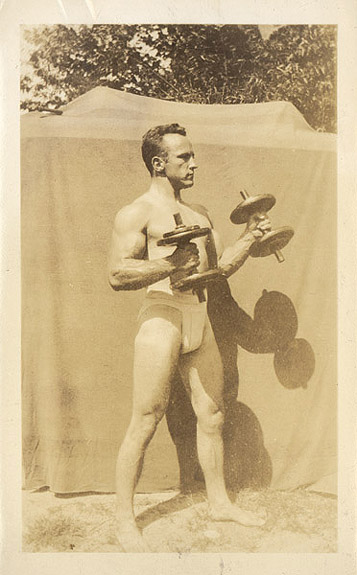
The bicycle, apparently. Men found that they needed a lot of support while riding it-- although you'd think they would have realised this with horses too...

It's sad that after 6000 years we come almost full circle and where we started with the loincloth, with the jockstrap we finish off with the loincloth.

It's always fascinating to write gay romance because of the wonders to be found under a man's overclothes. It's interesting that names are so difficult to pin down. Small clothes, underthings, underwear--all were considered too delicate to mention and a writer risks getting it wrong no matter what she chooses.

But here's to them all. To the braies, the strossers, the drawers, the jockstraps, the loincloths, the smallclothes, the boxer shorts, the codpiece, the hose. Here's to everything that wraps around that small difference between men and women--viva la difference!

Erastes
www.erastes.com
Erastes writes gay historicals, and her first book for Carina is "Muffled Drum" (set during the Austro Prussian War) and will be out in July 2011. It's full of soldiers, horses, angsty love drawers and many many buttons.


Wednesday, January 05, 2011

History of Men's Underwear - Part One!

By Erastes

Being a writer of Gay Historical Fiction, I find I have to research the subject of what was worn under the overclothes pretty often.

This reminds me of the old joke:

Woman: (to Scottish soldier) Tell me, Sargeant, is anything worn under the kilt?

Scottish Soldier: No, ma'am. It's all in perfect working order!

So I thought you might like to share in my researches in this fascinating study!

underpants-loin

Loincloths might still be around (roll on global warming) but they have been found in burial sites on the bodies of men living over 7000 years ago. Who knows what sparked man to start covering his bits – it would hardly be warmth, after all. It would offer some level of protection from thistles I suppose, but not if a sabre toothed-tiger was coming at you at groin level.

Tutankhamen was buried with 145 loincloths. This seems either a lot, or not enough, depending on your point of view of how long the afterlife is going to be. Of course by this time, the loincloth was worn under a skirt. Still – roll on global warming.

underweargreek

The Ancient Greeks obviously didn't have to worry about sabre-toothed tigers, and consequently didn't wear any underwear at all. Good for them! Φοβάμαι τους Έλληνες όταν είναι πηγαίνοντας καταδρομέας!**

The Romans did, though – big sissies. Possibly because their empire stretched into chillier areas. They'd wear something called a subligaculum, which in modern terms means a pair of shorts or a loincloth and was worn under a toga or tunic.

underpantsroman

Oh yes, I know - probably NOT an accurate picture of underwear but is anyone complaining I'm showing this picture from a recently restored version of Spartacus?

Pull on undergarments were invented around the 13th century, large baggy drawers called "braies" made from linen were worn by men under their clothes. This style of undergarment did not really change in design for 500 years, other than to be fashioned from better, finer fabrics and to have ornamentation.

They shrank considerable during the Renaissance as the familiar image of cod-piece and hose emerged. The hose themselves were an open garment – not like our tights or hose of today.

underpantsbraies

Tight on the legs and open at the front and back which could not be worn openly as the privities hung lose. As the doublet became shorter somthing else was needed! The braies shrank to show off the hose, and the codpiece was developed to protect the wearer's modesty.

Or at least at first.

Gradually the codpiece evolved, became padded, shaped to fit and as some clearly showed were frankly showing off- and obviously exaggerating. Some of the most "impressive"are those belonging to Henry 8th and shown at the Tower of London, where other Crown Jewels are protected too!!

codpiece

What is interesting is that the fashion of today – that of showing off one's designer underwear, is not a new thing at all. The rich would commission the most exquisite undershirts,and underwear- fabulously expensive fabrics and meticulously embroidered. Why, they reasoned, am I paying for such incredible work that will never be seen? This led to the "slashing" fashions that we see in the Elizabethan period, where the overclothes had slits in- the better to show off the gorgeous clothes being worn beneath.

underslash

After these excesses calmed down, and waistcoat shirt and breeches took the place of doublet and hose, men returned to wearing braies or "strossers" – during the English Civil War the only difference between undergarments and overgarments were the weight of the wool they were made from.

**I fear the Greeks going commando

Next time - from 1700 to the mid 20th century.

Erastes writes gay historicals, and her first book for Carina is "Muffled Drum" (set during the Austro Prussian War) and will be out in July 2011. It's full of soldiers, horses, angsty love and many many buttons.