Friday, August 02, 2013

Saving Grace


Hypocrisy, double-standards, call it what you like, but I know the Victorians weren’t quite as straitlaced as history leads us to believe. I was brought up on the Isle of Wight—literally five minutes in distance but a thousand miles away in terms of luxury—from Osborne House, Queen Victoria’s island retreat. Prince Albert, that bastion of Victorian morals, had a private bathroom there with one wall completely dedicated to a…well, pornographic mural!

I thought it would be fun to start a Victorian series based on a band of well-heeled Vigilantes, righting wrongs that might otherwise slip through the cracks. Doing researched I discovered that the largest diamond in the world, the Koh-i-Noor,  was exhibited at the Great Exhibition of 1851. The exhibition was organised in part by Prince Albert, keen to show the world that Britain had the cutting edge when it came to modern technology.

Incidentally, the Great Exhibition, or Crystal Palace as it was more commonly known—a great feat of glass and steel engineering in its own right—was moved to South London, where I lived from many years. It burned down years later and I walked past the ruins every day with my dog, wondering what it must have been like—a building before its time in a rapidly changing world.

Anyway, the diamond in question was gifted to the Queen as Emperor of India, but ownership had always been hotly contested and the diamond is reputed to bring bad luck to any man who wore it. Needless to say, someone tried to steal it during the exhibition, as they do in my steamy novel, Saving Grace.

1851 The year of the Great Exhibition in England. The largest diamond in the world has been gifted to Queen Victoria. Plans are afoot to steal it and the Home Secretary calls in Jacob Morton, the Earl of Torbay, and his highly-trained band of vigilantes to prevent the theft causing a diplomatic incident.
 
Lady Eva Woodstock is trapped in a loveless marriage to the man behind the plot. Throwing in her lot with Jake and his compelling associate, Lord Isaac Arnold, her dormant passions are awoken beneath Isaac’s skilful hands. But she will never be free of her husband, nor will she gain custody of her daughter, Grace, unless she can find the courage to face up to William and beat him at his own game.
 
How far will a mother go to secure her child’s future and protect the man she loves…

Saving Grace by Wendy Soliman Just $1.99 http://amzn.to/144oNpa
Wendy

Friday, July 19, 2013

A Georgian Marriage Gone Bad

One of the reasons I like setting love stories in the past is that the stakes were so high. When couples married two hundred years ago, it was for life. I was recently reading about the Georgian/regency novelist, Matthew "Monk" Lewis (a brief mention of Lewis and his most famous work, the lurid and bestselling The Monk, can be found in this earlier post on gothic horrors). The story of his parents' disastrous marriage is almost as colorful as Lewis's fiction.

Matthew Lewis (not the actor who played Neville Longbottom, but the father of the author of the same name) married Frances "Fanny" Maria Sewell in 1773, when both were twenty-three. Lewis had already earned a master's degree from Oxford and was the Chief Clerk in the War Office; in just two years, he would be the Deputy-Secretary at War. His family was wealthy, as was hers. Both owned neighboring estates in England as well as substantial property in Jamaica. The couple had four children together, of which the novelist, Matthew Gregory Lewis, was the eldest and heir. The senior Matthew Lewis seems to have been dedicated and hard-working; Maria, on the other hand, was admired, artistic, and injudicious.

The lurid plot of Matthew Gregory Lewis's The Monk manages to outdo the drama of his family life. ("A Monk with a Beguine," 1591, by Dutch painter Cornelis van Haarlem.)

By 1781, when little Matthew was only six, his parents' marriage wasn't going well, owing to their mismatched temperaments--and to his mother's interest in a music master named Samuel Harrison. After sleeping apart for some time, the couple decided to separate, with Lewis agreeing to generous terms that gave his wife the use of one of his houses, full custody of the children (legally, they were his to take away), and six hundred pounds a year. Before the separation was finalized, however, Lewis returned from a visit to the Duke of Dorset to discover Fanny had been flagrantly carrying on in his house with Harrison the music master, sending him into a "phrenzy."

Fanny Lewis fled. She began changing addresses and using a false name, Mrs. Langley, to avoid her husband. He was able to track her down, however, and came to confront her on July 3, 1782--which, inconveniently for Fanny, happened to be the same day she was giving birth to an illegitimate child by the music master.

Lewis sought a separation--not a private one, but a judicial separation of the sort obtained as a precursor to divorce. On February 27, 1783, Lewis was awarded his separation on the grounds of adultery. Divorces, however, were as complicated and expensive to obtain as they were rare. Lewis petitioned Parliament, and his counsel presented the facts of Fanny's adultery, but the House of Lords refused to grant the divorce.

And here's the part that's most surprising to me as a citizen of the twenty-first century: Lewis supported Fanny until his death in 1812. Why did he agree to such generous terms? Probably because it was the thing to do. A husband was expected to "keep" his wife, which meant everything from seeing that she didn't go hungry to paying her gambling debts. It was one of the fundamental expectations underlying marriage--just as wives had a duty to have sex with their husbands whether they liked it or not, husbands had a duty to support their wives financially whether they liked it or not. And since marriage was a sacrament, adultery and even separation couldn't completely erase that expectation.

Though it's slightly off-topic, I'll close with an anecdote from James Boswell's 1791 Life of Samuel Johnson that provides a little more insight into the Georgian view of marriage as immutable and permanent, no matter how messy: 
I repeated to him an argument of a lady of my acquaintance, who maintained, that her husband's having been guilty of numberless infidelities, released her from conjugal obligations, because they were reciprocal. Johnson: "This is miserable stuff, Sir. To the contract of marriage, besides the man and wife, there is a third party -- Society; and, if it be considered as a vow -- GOD: and, therefore, it cannot be dissolved by their consent alone.

Samuel Johnson was no fan of divorce. (Painting by Joshua Reynolds.)
Laws are not made for particular cases, but for men in general. A woman may be unhappy with her husband; but she cannot be freed from him without the approbation of the civil and ecclesiastical power. A man may be unhappy, because he is not so rich as another; but he is not to seize upon another's property with his own hand." Boswell: "But, Sir, this lady does not want that the contract should be dissolved; she only argues that she may indulge herself in gallantries with equal freedom as her husband does, provided she takes care not to introduce a spurious issue into his family. You know, Sir, what Macrobius has told us of Julia."*  Johnson: "This lady of yours, Sir, I think, is very fit for a brothel."
*Boswell's reference to "what Macrobius has told us of Julia" concerns a report that Augustus Caesar's daughter supposedly indulged in adultery only if she was pregnant with her husband's child: "To certain persons who knew of her infidelities and were expressing surprise at her children’s likeness to her husband Agrippa, since she was so free with her favors, she said: "Passengers are never allowed on board until the hold is full."

Alyssa EverettAlyssa Everett's upcoming regency romance, A Tryst With Trouble, will be released on September 23. It will join her current release, Lord of Secrets, and her debut regency, Ruined by Rumor. Alyssa hopes you'll visit her website and follow her on Twitter and Facebook, where she promises not to spam you.

Sunday, July 14, 2013

Prepare for MORE GLORY!

Like every other history lover/geek/nerd in the movie-watching world, I was pretty excited when, in 2006, the movie 300 exploded onto the big screen. Fans of the comic book series had an edge over those of us who had not experienced King Leonidas on the page, but I’m not sure that made a big difference to the non-purist crowd. For me, it coined the term “hot men in leather underpants” and is the only movie I’ve paid to see twice in the theatre in recent memory.

Now, the film that spawned catch phrases like “THIS IS SPARTA!” and “Let us fight in the shade” as well as a host of work out videos and Halloween spray-on abs has a sequel. Yes, 300: Rise of an Empire is due in movie venues in 2014.

…and I’m not sure how I feel about this.

Because the king dies in the end of the first film. You know this going in if you know your history. All the warriors we drooled over loved died, so…let’s take a look at the synopsis for the sequel, shall we?

“After its victory over Leonidas' 300, the Persian Army under the command of Xerxes marches north towards the major Greek city-states. The Democratic city of Athens, first on the path of Xerxes' army, bases its strength on its fleet, led by admiral Themistocles. Themistocles is forced to an unwilling alliance with the traditional rival of Athens, oligarchic Sparta whose might lies with its superior infantry troops. But Xerxes still reigns supreme in numbers over sea and land.” (IMDB, written by Garganuan Media)

So we have a new hero, and it’s presumably going to be a sea-based tale? Lena Heady and Rodrigo Santoro reprise their roles as Queen Gorga and Xerxes, respectively. I’m not recognizing a lot of other names in the cast, but that might be because they’re more a foreign group than American. It boasts the same action-animated style as its predecessor, and the abs and leather undies are still prevalent.

It’s interesting to note that this is not the first film ever made regarding Themistocles. He was a noted Athenian politician and general, one of the first not born to the aristocracy. During the first Persian invasion, he was one of ten Athenian generals who fought and led men at the battle of Marathon. The second Persian invasion culminated in two notable battles: Artemisium and Salamis. A lot of politicking and alliance building went on behind the scenes to try to do two things: unify the Greek city-states against the Persians, and lure some of the Greek allies from Xerxes’ side. One more battle forces Xerxes to give up and return home, finally defeated. Ironically enough, Themistocles ends up ostracized after some internal struggles following the war, and seeks refuge in Persia, working for their government.

So, given all that…will you go see this movie? I’m still not sure.

Friday, July 12, 2013

Getting Close to Release Day!

Happy middle of July everyone. Can you believe the year is already half over? I can't, nor can I believe my latest Carina release, Hero's Redemption will be out in a little over two weeks. To celebrate, I'm posting an excerpt today. I hope you enjoy it and consider checking out Devon and Cathleen's story. 
Have a great July everyone!


Devon, Lord Malton, tossed in bed, the throbbing pain in his thigh pulling him from the oblivion of drunkenness into a semi-sleep that clung to him like tar.

"No," he moaned. The ghostlike images of old comrades and dead enemies drifted through his mind. Distant cannon fire rolled in the air, growing louder as light began to creep in along the edges of the sharpening visions. "No."

In a flash the world turned bright, the afternoon sun reflecting off the stone walls of Hougoumont Manor's courtyard. Around him, British soldiers and trapped French soldiers fought, the metallic ring of sabers carrying over the shouts of dying men and the screams of frightened horses.

"Cochon anglais!" A French soldier charged at Devon and he swung around to face him. "Je te tuerai."
They locked swords, the Frenchman's wild eyes meeting Devon's across the blade.

"Maintenant--au diable!" Devon shoved the Frenchman back. The burly soldier staggered slightly but desperation gave him strength and he hurled himself forward.

Devon was stepping back to parry when his boot rolled on the arm of a dead man and he fell, landing hard in the mud. The Frenchman lunged again. Devon swung his sword, deflecting the blow but the Frenchman's blade slid down the length of Devon's, impaling his thigh.

"Bloody hell." Devon dug the heel of his boot into the man's chest and kicked hard. A searing pain nearly blinded him as the man's blade tore free.

The Frenchman pulled himself to his feet and advanced. Devon rose up on one knee, lifting his sword to defend himself when suddenly the flash of a red coat cut across his vision. Captain Selton stood between them, his sword clanging against the Frenchman's.

"Get back to the safety of the manor," the young officer called, swinging to repel the enemy's blade.

"I'm not going anywhere." Devon stood, gritting his teeth against the pain. He limped forward, determined to fight when the sickening sound of metal slicing flesh drowned out the cannons. Captain Selton wavered a moment then slumped to the ground.

"No!" Devon yelled.

The Frenchman, his sword still lodged in Captain Selton's chest, met Devon's eyes, smug triumph dancing in their watery depths.

"Bastard!" Devon hurled himself at the man, his pain forgotten in a rush of anger. The Frenchman's triumph turned to fear as Devon impaled him, driving him backwards across the courtyard, forcing the sword in deeper and deeper until it drove itself through his body, lodging in a wooden door in the far wall. Devon pulled out the blade and the Frenchman dropped to the ground.

Devon stepped back and his wounded leg buckled. He fell hard against the wall, his palm scraping over the rough stone as he slid down into the mud. When he pressed his hand over the wound, the blood stained his breeches and covered his fingers. Out across the courtyard, heavy clouds of black powder smoke drifted through the fighting men, passing over Captain Selton, who lay with the others, his lifeless eyes watching the sky.

"No," Devon cried in anguish. "No."

"It's all right," a soft female voice carried over the crack of gunfire. "You're safe now."

"I couldn't save him." Devon choked, struggling to breathe through the acrid smoke. "I couldn't help him."

"I know." Gentle hands stroked his hair, his forehead and cheeks, their tenderness easing his tight chest and softening the pain coursing through him. "Sleep now."

Tuesday, July 09, 2013

Double, double, toil and trouble…

...Fire burn and brimstone bubble. Witches and witchcraft date back through the ages to when people worshipped the Mother Earth or nature goddess. It was a time before traditional religion when the unexplained was called magical and people with unique talents were special.  The Old Religion which existed since the Stone Age was far from evil. These people were connected with the seasons, the plants, the animals and the planet and sought a balanced life. These special people were seers, knowers, healers, and averters of evil.

Over the centuries the nature goddess was replaced by more traditional religions and practices. The word witch only took on a negative meaning with the coming of Christianity, which taught that all the heathen gods were devils. And by association, anyone who clung to the old ways and the Old Religion was a devil worshipper.

The real roots of witchcraft and magic appear to come from the Celts, a diverse group of Iron Age tribal societies which flourished between about 700 BC and 100 AD in northern Europe.  The Celts were a brilliant and dynamic people, gifted artists, musicians, storytellers, and metalworkers, as well as expert farmers and fierce warriors much feared by the Romans.

They were also a deeply spiritual people and believed in the many gods associated with Mother Earth, the Divine Creator.  By about 350 BC, a priestly class known as the Druids had developed. They became the priests of the Celtic religion as well as teachers, judges, astrologers, healers, midwives and bards.

The religious beliefs and practices of the Celts, their love for the land, and their reverence of trees (the oak in particular) grew into what later became known as Paganism. Blended over several centuries with the beliefs and rituals of other societies, practices such as concocting potions and ointments, casting spells and performing works of magic, all of which (along with many of the nature-based beliefs held by the Celts and other groups) developed and became known as witchcraft in the Medieval Period. 

There are many types of witches. The witchcraft of the Picts, the early inhabitants of what is now the Scottish Highlands, goes far back and differs from all the other types of witchcraft in Europe. This is Old Scotland and its history and legends are filled with stories of magickal workings, spells and charms. There are charms performed to increase farm production, to ensure a favorable wind for fishermen. Some seamen walked around a large monolith stone seven times to encourage a good trip/catch. Other people created charms such as the woodbine wreath. They would cut down woodbine (a form of honeysuckle) in March during the waxing moon (anytime between new moon and full moon) and twist the boughs into large wreaths. They kept the wreath for a year and a day.  Young children suffering from a fever would be passed through the wreaths three times to be cured. 

Old superstitions have a strong hold on people. There are hints of the ‘old ways’ even today. Some in Scotland carry a lucky penny or ‘peighinn pisich’ that they turn over three times at the first glimpse of a full moon.

There are many cases of Witchcraft throughout Scottish history, demonstrating the zeal of the Protestants and Catholics alike, in their paranoia over possible "servants of the devil." The vast majority of Scottish Witches practiced as Solitaries (alone without a coven), only occasionally coming together for special celebrations.
Witchcraft was first made legally punishable, in Scotland, by an Act passed by the Scottish Parliament, in 1563 during the reign of Mary. Witch hunts swept through Northern Europe in the 16th and 17th centuries and were fed by a mixture of superstition, religious fever, political motivation and general suspicion. No one was safe, not the peasant not the nobleman. Storms, diseases, and misfortunes had to be blamed on something or someone—witches were an easy target.  

Types of witches
Kitchen Witch: Practices by home and hearth, mainly dealing with practical sides of the religion, magick, the elements, and the earth.

Ceremonial Witchcraft: Mainly use ceremonial magick in their practices such as Kabbalistic magick or Egyptian magick.

Satanic Witch: This doesn't exist. Why? Contrary to the witch hunts of Europe and America, witches don't believe in Satan.

Celtic Wicca: Believe in the elements, the Ancient Ones, and nature. They are usually healers. They work with plants, stones, flowers, trees, the elemental people, the gnomes, and the fairies.

Eclectic Witch: These witches don’t follow a particular religion or tradition. They study and learn from many different systems and use what works best for them.

British Traditional Witch: A mix of Celtic and Gardenarian beliefs. They train through a degree process and the covens are usually co-ed.

Alexandrian Tradition: They are said to be modified Gardenarian.

Gardenarian Tradition: Follow a structure rooted in ceremony and practice. They aren't as vocal as others and have a fairly foundational set of customs.

Dianic Tradition: A compilation of many different traditions rolled into one. Their prime focus is the Goddess. It is the more feminist side of 'The Craft'.

Pictish Witchcraft: It's originally from Scotland and is a solitary form of The Craft. It is more magickal in nature than it is in religion.

Hereditary Witch: Someone who has been taught the 'Old Religion' through the generations of their family.

Caledonii Tradition: Also known as the Hecatine Tradition, it has its roots in Scotland.

Pow-Wow: Comes from South Central Pennsylvania and is a system based on a 400 year old Elite German magick. They concentrate on simple faith healing.

Solitary Witch: Any witch who practices alone, without a coven.


Strega Witches: Originally from Italy this group is known to be the smallest group in the US. It is said their craft is wise and beautiful.

Last week my second book, The Guardian's Witch, was published. I must tell you I didn't think I could get more excited than I did when my first book, Knight of Runes, was released. Boy was I wrong! It was just as exciting. 
This story is about a reluctant witch. I suppose that's not surprising considering the story takes place in England in 1290, a time when witch hunts were happening. Our heroine does all she can to hide her 'gift' but when the man she loves is accused of treason and she is destined to be given to accuser she has to decide whether to rely on her knight to find a way to save them both or does she trust her magic and risk exposure as a witch. What type of which do you think she is?
 

Saturday, July 06, 2013

The Battle of Vittoria

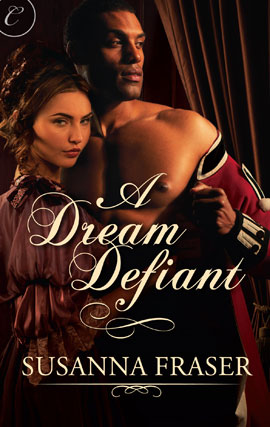
My July 29 release, A Dream Defiant, takes place in the immediate aftermath of the Battle of Vittoria during the Peninsular War (i.e. the main British land campaign of the Napoleonic Wars, during which an Anglo-Portuguese force under Wellington's command gradually drove the French from the Iberian Peninsula.

Vittoria took place late in the war, on June 21, 1813. Prior to 1813, while Wellington's forces won practically every battle they fought, they didn't have the numbers to gain a total victory until after 1812, when Napoleon's disastrous invasion of Russia forced him to pull troops from Spain.

The town of Vitoria (note--not a typo. I'm using the modern spelling for the town and the older one used by the British at the time for the battle) is in Basque country in the northeastern part of Spain, which by itself tells you that Wellington's army had almost succeeded in driving the French back to their own borders. In fact, by this point Joseph Bonaparte, Napoleon's older brother whom he'd installed as King of Spain, had abandoned Madrid and was with the French army--with a formidable baggage train of royal riches and treasures looted from Madrid along with the usual money and gear you'd expect an army to be transporting. Its estimated value was one million pounds in 1813 money. While it's difficult to accurately convert currency values from two centuries ago, think $150,000,000 or so. In other words, a lot.

I won't go into details of the battle, though I'd be happy to point anyone who's interested to sources. Suffice it to say it turned into a rout. The French fled the field, in their haste abandoning that baggage train of treasure.

Wellington, of course, would've preferred that his soldiers pursue their defeated enemy. Instead, discipline temporarily collapsed, and they stopped to plunder--along with not a few French soldiers who wanted to claim a few treasures of their own before catching up with their units.

And so not the battle but its aftermath became the springboard of my story. My hero, Elijah Cameron, comes upon one of his men in a lethal struggle with a French soldier for a ruby necklace. Elijah drives the Frenchman away, but it's too late for his friend--who entrusts the necklace to Elijah to give to his widow, Rose Merrifield, so she can use it to return to England and have the life she's always dreamed of--buying an inn in her home village and using her cooking skill to make it a place where all the travelers on the Great North Road will want to linger over their dinners. But once rumors of the treasure get out, Rose isn't safe from men who'd use her and the necklace to their own ends. And the only one she trusts to protect her is Elijah...

Wednesday, June 19, 2013

A Traitor's Fate

Until 1870, if you were a man (not a woman) convicted of high treason in Great Britain, the judge would pronounce sentence upon you as follows:
That you the prisoner, now at the bar, be conveyed hence to the place from whence you came, and that you be conveyed thence on a hurdle to the place of execution; where you are to be hanged by the neck; that you be cut down alive, that your privy members be cut off, your bowels taken out and burnt in your view; that your head be severed from your body; that your body be divided into four quarters; which are to be disposed of at the king's pleasure; and God of his infinite mercy have mercy upon your soul.
The penalty was called drawing and quartering, and it was pretty strong stuff. Perhaps that was why, at the urging of regency reformer Sir Samuel Romilly, the emasculation and disembowelment sections of the law were repealed in the Treason Act of 1814.

Thomas Harrison, one of the regicides who condemned King Charles I to death, and under Charles II received the full pre-1814 punishment for high treason. The diarist Samuel Pepys wrote of the 1660 execution, "I went out to Charing Cross, to see Major-general Harrison hanged, drawn, and quartered; which was done there, he looking as cheerful as any man could do in that condition."
The 1814 law also left it to the king's discretion whether those convicted of high treason had to be drawn to the place of execution on a hurdle, and also whether "such person shall not be hanged by the Neck, but that instead thereof the Head shall be there severed from the Body of such person whilst alive." The law still specified, however, that whether the person was hanged to death or beheaded, the traitor should ultimately end up with his head cut off and his body divided into four quarters. High treason was the most serious crime a man could commit in Great Britain, and it was punished accordingly.

The last persons actually condemned to be drawn and quartered in England were the Cato Street conspirators, a group of regency radicals. They were followers of the late Thomas Spence, who had espoused the notion that "if all the land in Britain was shared out equally, there would be enough to give every man, woman and child seven acres each." With unrest in the country growing, radical "levellers" like the Spenceans worried the government so much that the Home Office planted spies in the group.

In February of 1820 one such spy, George Edwards, informed a leader of the group, Arthur Thistlewood, that government ministers would be holding a cabinet dinner at the Grosvenor Square home of Lord Harrowby. Thistlewood hatched a plan to storm Harrowby's house, kill the ministers, and then display the heads of Lord Castlereagh and Lord Sidmouth (the leader of the House of Commons and the Home Secretary respectively) on poles. The heads would be paraded through the poorer sections of London, and public buildings would be set on fire in the hopes of inciting the total overthrow of the government. To that end, Thistlewood and his followers rented a vacant stable and hayloft not far from Grosvenor Square, on a street off Edgeware Road called Cato Street.

The Cato Street Conspirators
An artist's rendering of the Cato Street raid, with Smithers the Bow Street Runner being run through.

On February 23, conspirators gathered in the Cato Street command post with guns, swords, knives, and a hand grenade. Across the street in a public house, a magistrate from Bow Street, Richard Birnie, assembled with a dozen Bow Street Runners and a government spy named George Ruthven. They stormed the stable to arrest the conspirators. Ruthven shouted, "We are peace officers. Lay down your arms." But when a Bow Street Runner named Smithers moved in, Thistlewood stabbed him with a sword. Smithers died soon after.

Several of the conspirators surrendered, several had to be overpowered, and several escaped. Unfortunately for the escapees, George Edwards had provided the government with the names of all the Cato Street participants. Eleven men were eventually brought to trial.

The government had learned from a previous trial against Spencean radicals--Thistlewood included--that their own spies made poor witnesses, since the counsel for the defense was able to portray them as agents provocateurs, agitators who incited citizens to commit crimes they otherwise might not have committed. In this case, Edwards had brought the cabinet dinner at Lord Harrowby's house to Thistlewood's attention. Prosecutors were able to persuade three of the conspirators to give evidence against the eleven defendents in return for dropping the charges against them. During the trial, James Ings testified that Edwards had drawn him unwittingly into the conspiracy, and, bursting into tears, said, "I am like a bullock drove into Smithfield to be sold...I hope, before you give your verdict, that you will see this man brought forward, or else, I consider myself a murdered man."

On April 28, 1820, all of the Cato Street defendents were found guilty of high treason and sentenced to death. Thistlewood complained at his sentencing that the court had refused to allow him to "prove the infamy of Adams, of Heiden, and of Dwyer," the three chief witnesses against him, and George Edwards was never put on the stand at all.

Though the Cato Street conspirators were the last traitors in Great Britain sentenced to drawing and quartering, the sentence was afterward commuted to hanging and posthumous beheading, and six of the prisoners who had changed their plea from "not guilty" to "guilty" had their death sentences commuted to transportation.

A May Day Garland for 1820
Government figures dance around the severed heads of the Cato Street conspirators in a reference to their May Day executions, while in the background, spy George Edwards fiddles and says, "Dance away my friends, I have been the cause of all this fun by your help and money, 'Edwards the Instigator!'"

Executions were carried out swiftly in the early 19th century. On May 1, 1820, Thistlewood, John Brunt, William Davidson, James Ings and Richard Tidd were brought out before a crowd at Newgate. Ings began shouting the song "Death or Liberty," prompting Richard Tidd to tell him more than once to stop making noise. The men were then hanged--Ings and Brunt struggled for quite a while--and left on the gallows for half an hour before their bodies were lowered one at a time. A masked man cut the head from each body with a surgeon's knife. He passed the head in turn to the assistant executioner, Thomas Cheshire, who held it up for the crowd to see and proclaimed from each side of the scaffold, "This is the head of (name), the traitor!" The head and body were then placed together in a coffin.

It was all quite gruesome, even without the privy member removal and the burning bowels.

Alyssa EverettAlyssa Everett's upcoming regency romance, A Tryst With Trouble, includes a brief mention of the Cato Street conspirators and their fate. When it's released on September 23, it will join her current release, Lord of Secrets, and her debut regency, Ruined by Rumor. Alyssa hopes you'll visit her website and follow her on Twitter and Facebook, where she promises not to spam you relentlessly.

Friday, June 14, 2013

Not-So-Secret Hero Material

The United States Secret Service gets a lot of attention (good and bad) for its role in protecting the President, the First Family, and presidential candidates on the trail. But that wasn’t their original intended role. The Secret Service was formed by Abraham Lincoln in April, 1865, days prior to his death, to combat the rampant counterfeit issue with US currency brought on by the Civil War.  A branch of the Treasury Department, the branch began investigating everything from bad money to murder because, at that time, no other apparatus of the federal government had the jurisdiction to do so except the US Marshalls and they were short on man power.

So how did an organization started to battle funny money become the protector of US presidents?  Here’s a short timeline of Big Moments in Secret Service History:
  • 1865 – The Secret Service is created
  • 1901 – Congress first informally requested the Secret Service provide protection following the assassinating of President William McKinley
  • 1902 – The Secret Service assumed full-time responsibility for the protection of the president (the Uniformed Division)
  • 1968 – As a result of the Robert Kennedy assassination, Congress authorized protection of major presidential candidates and nominees (they may decline protection)
  • 1965 & 1968 – Congress authorizes lifetime protection for the spouses of deceased presidents (unless they remarry) and the children of former presidents until age sixteen, or ten years after the presidency
  • 2003 – Oversight of the department was transferred from the Treasury Department to the Department of Homeland Security
While some responsibilities have been siphoned off the Secret Service, they still do vastly more than protect presidential types. They are still involved in tracking and prosecuting counterfeiters as well as electronic or cyber crimes with regard to financial institutions and ‘critical infrastructures.’

Secret Service agents have served as romantic heroes in Hollywood since the 1950’s when Burt Lancaster starred in Mister 880, and most notably in1992’s The Bodyguard, which featured Kevin Costner as a retired agent protecting a music diva.  Most recently, Gerard Butler surfaced as hero material as Agent Mike Banning in Olympus has Fallen.  Can you say “eye candy”?

I recently started a new WIP that features a Secret Service hero, and the research has been so much fun! So which type of heroic agent turns the pages for you?

Wednesday, June 12, 2013

Hero's Redemption Cover Reveal

Hello everyone. I'm excited to show you the beautiful cover for my July 29, 2013 release, 
Hero's Redemption.
I hope you love it as much as I do.


London, 1817

Devon, the Earl of Malton, is a hero for his deeds at the Battle of Waterloo. But he suffers terrible nightmares, and drinks himself to sleep most nights. A habit he vows to break when he awakes one morning to find a woman sharing his bed, no memory of how she got there, and her angry brother at his door.

Cathleen is mortified when her wastrel brother and his greedy wife propose a blackmail scheme involving the earl, but as a penniless war widow she's at their mercy. She goes along with the plan and sneaks into Devon's bed one night, and ends up comforting him through a night terror.

Charmed by her beauty and kindness, Devon determines that rather than pay the blackmail, he will offer his hand in marriage to Cathleen. Although she is deeply attracted to the stoic earl, Cathleen cannot understand why Devon would want to marry her. What she doesn't know is that Devon owes her a debt that can never fully be repaid…

34,000 words

Sunday, June 09, 2013

Medieval New York

I’ve always daydreamed about medieval castles and valiant knights, even a few damsels in distress. Fortunately when I traveled overseas for business several years ago I had time over the weekends to sight see.
I didn’t have to go overseas though, I could go to Washington Heights, on the northern tip of Manhattan, New York City and visit the Cloisters. The Cloisters and its gardens is rises proudly on the shores of the Hudson River.
The museum opened in 1936 and is devoted to medieval art and architecture. The building itself is not a copy but rather a composite design incorporating elements from Saint-Michel-de-Cuxa, Saint-Guilhem-le-Désert, Bonnefont-en-Comminges, Trie-en-Bigorre, and Froville from the 12th to 15th centuries.
 Interested in medieval art, George Grey Barnard, a sculptor and architect, gathered discarded fragments of medieval architecture from French villages before World War I. He established this collection in a church-like brick building near his home in Washington Heights, Manhattan in New York City. The collection outgrew its home.
The building and collection were purchased by John D. Rockefeller Jr. in 1925.  Rockefeller, also an avid art collector, added to the collection. His most notable addition was the Flemish tapestries depicting The Hunt of the Unicorn.  The Hunt of the Unicorn   
In addition, Rockefeller funded the acquisition of nearly 67 acres that the Cloisters sits on today, north of Barnard’s original building, as well as an additional 700 acres across the Hudson River in New Jersey to ensure the view. Incorporating the various cloisters from Europe, Charles Collens went on to design The Cloisters we see today. The Cloisters is part of the Metropolitan Museum of Art.
The curators made every attempt to maintain the medieval appearance. The land surrounding the Cloisters has been planted according to horticultural information found in medieval treatises and poetry, garden documents and herbals. The Cloisters houses a wonderful collection of over five thousand works of art from medieval Europe, dating from the ninth to the sixteenth century. Works include tapestries, stained-glass windows, column capitals, exquisite illuminated manuscripts,  metalwork, enamels, and ivories all set in this unique context.
On a warm summer day you can find the grounds of The Cloister filled with sight seers and picnickers. While it may not be exactly the same a walking through the medieval buildings in Europe, it’s a close second!

Thursday, June 06, 2013

Introducing A Dream Defiant!

I'll be taking a few months off from my series on titles and forms of address for the British aristocracy to celebrate my July 29 novella release, A Dream Defiant. Isn't the cover beautiful?


While this book is set in 1813 in the aftermath of the Battle of Vittoria, a cursory glance at the cover will tell you this isn't your typical Regency romance. Like most of my heroes, Elijah Cameron is a British soldier, one who's been in the army since his early youth and knows its ways well. But rather than leaving a village in England or Scotland as a lad, he grew up with his regiment. His parents, born in Virginia as slaves, ran away to the British lines during the American Revolution and spent the next twenty-five years as servants--free and fairly paid--of a senior officer in the regiment.

Growing up as he did, it's hardly surprising that Elijah became first a drummer boy and then a soldier. When his story opens he's content with his life, only to have it turned upside down when a dying comrade in arms entrusts him with a treasure to give to his soon-to-be-widow--a beautiful and quietly brave women Elijah has admired from afar for years.

So, what compelled me to write the story of a black redcoat in the Napoleonic Wars? Well, it started a few years ago, when I was reading about black Union soldiers in the Civil War on Ta-Nehisi Coates's blog. (See one such post HERE.)

I briefly considered writing my own Civil War story--it's an era I know almost as well as the Napoleonic Wars, after all. But I just couldn't get over the feeling that it was presumptuous of me to write a black Union soldier as a hero, given that I'm not only a white woman, I'm a white woman born and raised in Alabama and the great-great-granddaughter of a Confederate soldier from that same state. Put simply, I felt like I had no right to cloak myself in the mantle of the right side of a war where my ancestors were unequivocally on the wrong side.

(It's not that I feel guilty about my ancestry--I hardly chose it myself, after all--nor do I think my great-great-grandfather was a bad person. I don't know much about him, really, beyond that he was extremely fertile, fathering seventeen children with three wives in succession. He didn't own slaves--my family were poor Appalachian farmers right up through the Depression. He wasn't a moral giant enough to have challenged the values of his state and his culture, but how many of us are? Still, none of that changes the fact that the Civil War was one of those few conflicts with a clear right and wrong side, and my ancestor fought for the latter.)

So I decided to write about a black soldier in my era. I knew such soldiers existed, in both the French and British armies. They're mentioned in Swords Around a Throne, John Elting's encyclopedic book on Napoleon's army, and I'd run across occasional references in my research on the British army. While a black man in the British army was more likely to be in a West Indian regiment or to be part of a regimental band (that stereotype already existed, evidently), I never found any evidence that someone like my Elijah wouldn't have been permitted to enlist in a regular redcoat infantry regiment, so I gave my muse free rein. As for how well it turned out, in a little less than two months you can be the judge of that!

A Dream Defiant is already available for preorder at Amazon, Barnes & Noble, Google, and the iTunes store, and will be available on the Carina site and other e-tailers as the release date draws closer.

Saturday, June 01, 2013

Beguiling the Barrister

This month sees the publication in the second of my four-book Regency
series featuring the Forster Dynasty. In Beguiling the Barrister Flick - Lady Felicity Forster - takes her chance to shine. With three older brothers, including the head of the family Hal Forster, Marquess of Denby, Flick has been cossetted and protected for her entire life, and she's had just about enough of it.

She's getting impatient with her neighbour, Darius Grantley, as well. She decided at the age of twelve, when she fell out of an oak tree and he was there to pick her up, that she planned to marry her handsome rescuer. Seems Darius has different ideas, which is downright insulting. She knows Darius enjoys her company but he seems more interested in forging a career for himself, defending the rights of the underprivileged in the famous Old Bailey courthouse, than he is pursuing Flick. Well, there's only so much neglect a girl can take and, taking advantage of a brief respite in the watch her brothers keep over her, Flick persuades Beth to go with her to the courthouse and watch her beloved in action.


Here's how she gets on:-

“Are you telling the court that Mr. Fuller called on you to take tea?” Darius Grantley elevated his brows, an expression of incredulity gracing his handsome face. “Nothing more sinister than that?”
“Well, he does enjoy a nice biscuit an’ all.”
“No money changed hands in return for the supposed services you provide in the establishment where you reside?”
“Ain’t no supposed about it,” muttered some wit in the public gallery. “Been there meself so I know about what I speak.”
Laughter erupted and was as quickly extinguished when the judge banged his gavel, a mask of impatience and considerable ill-humour flitting across his countenance.
Flick suppressed a smile. She and her sister-in-law were observing the proceedings from the public gallery. “I don’t think the judge approves of Miss Adams,” she whispered to Beth.
“I shall clear the courtroom if there are any more interruptions,” his lordship boomed. “Pray, continue, Mr. Grantley.”
“I’m obliged to your lordship.” Darius Grantley, barrister at law, straightened his shoulders and turned his attention to the woman in the dock. “Please answer the question, Miss Adams.”
“What was the question again, sir? What with all the excitement, it clear went out of my head.”
“Did you do it for money, love?” the same heckler yelled out.
“Absolutely not!” Miss Adams’s hand fluttered against her breast. “The very idea. I’m a respectable woman, and that’s the truth.”
“He’s good, isn’t he?” Flick said.
“He seems to know what he’s doing,” Beth conceded. “But why is he defending a woman of…well, a woman of such questionable morals?”
“Darius believes that everyone is equal in the eyes of the law,” Flick responded loftily. “He’s very liberally minded that way.”
Darius Grantley’s star was very much in the ascendancy at the Old Bailey since he’d chosen to defend wretched creatures often forced by desperation into committing crimes. The great and good in the legal profession generally agreed that his talents were wasted on, and went largely unappreciated by, his motley collection of clients. Perhaps that was true, but Darius appeared determined to serve them regardless of the fact that principles and conscience alone singularly failed to pay the rent.
“From the evidence already presented, it seems his client is as guilty as sin, in spite of your Darius’s best efforts to confuse the jury,” Beth said.
“Shush!” Flick pressed a finger to her lips. “This is very interesting. I don’t want to miss anything.”
“Not much chance of that,” Beth whispered back. “Your eyes have barely left Mr. Grantley’s person since we got here.”
The object of Flick’s affections grasped the edges of his black flowing robe and affected an air of astonishment. “Are you asking the court to believe that the gentleman who complained about being overcharged was a personal acquaintance who stopped by for a cup of tea and stimulating…er, conversation?”
“That’s right, ducks. He’s a sprightly old gent. He can still manage to get it—”
“Thank you, Miss Adams,” the judge intervened, much to Flick’s irritation. She’d very much like to know what it was that old Mr. Fuller could still manage to do. With three overprotective brothers to contend with, her education in that respect was woefully incomplete. “Confine yourself to answering counsel’s questions.”
“I was doing until you interrupted me, wasn’t I? Mr. Fuller gets confused sometimes, bless his heart. Well, at his age, what else can you expect?”
Darius glanced up, as though seeking inspiration from the four brass chandeliers overhead, and his gaze alighted on Flick and Beth. His expression showed surprise, quickly followed by irritation.
“Blast, he’s seen us!” Flick, her features hidden behind her veiled hat, had hoped their presence would go undetected.
“I don’t know why you’re so surprised,” Beth said, smiling. “You don’t have it in you to blend in.”
“Nonsense, I’d make a first-class wallflower.”
“You!” Beth covered a splutter of laughter with her hand. “Hardly, my dear. Apart from being so much better dressed than everyone here, you’re so lovely that you naturally attract attention wherever you go. You don’t bear even a passing resemblance to a humble wallflower.”
Flick wrinkled her nose. “What you mean is that I never did learn to impersonate a statue. Miss Archer quite despaired of me but I told her that all that rigid etiquette—pretending not to listen to interesting conversations that aren’t supposed to be for one’s ears—is pointless. I mean, how else is one supposed to know what’s happening in the world?” She waved her fingers at Darius. He glowered back at her and returned to the questioning of his client. “Oh dear, he doesn’t look too happy to see us, does he?”
“What else did you expect?”
Flick glanced at the motley assortment of people watching the proceedings. Beth was right. The two of them really didn’t belong here, especially given the nature of the trial in question, and they were attracting considerable unwanted attention. It didn’t bother her but she could see that Beth felt quiet discomposed by it.
“Sorry,” she said, covering Beth’s gloved hand with one of her own. “We shouldn’t have come.”
“Never mind, we’re here now. Let’s see how your Mr. Grantley gets his client out of this one. Not that I think he will but you keep telling me he’s clever enough to achieve anything he sets his mind to. It will be interesting to see if you’re right.”
“You still have doubts about him?” Flick pouted. “How could you? He’s truly magnificent.”
The magnificent Mr. Grantley appeared to have lost his thread and passed his client over to counsel for the crown without asking any more questions.
“Oh, hello, Mr. Harris,” Miss Adams said when the man stood up. “I didn’t realize it was you sitting down there. How are you, ducks? Haven’t seen you for…er, a cup of tea, for a while.”
The courtroom erupted into guffaws of laughter.

Beguiling the Barrister - Available on pre-order from Carina Press

http://bit.ly/18nEAjr  and all etailors 


Wendy