Showing posts with label history. Show all posts

Friday, August 09, 2013

Double, double, toil and trouble…

… Fire burn and brimstone bubble. Witches and witchcraft date back through the ages to when people worshipped the Mother Earth or nature goddess. It was a time before traditional religion when the unexplained was called magical and people with unique talents were special.  The Old Religion which existed since the Stone Age was far from evil. These people were connected with the seasons, the plants, the animals and the planet and sought a balanced life. These special people were seers, knowers, healers, and averters of evil.

Over the centuries the nature goddess was replaced by more traditional religions and practices. The word witch only took on a negative meaning with the coming of Christianity, which taught that all the heathen gods were devils. And by association, anyone who clung to the old ways and the Old Religion was a devil worshipper.

The real roots of witchcraft and magic appear to come from the Celts, a diverse group of Iron Age tribal societies which flourished between about 700 BC and 100 AD in northern Europe.  The Celts were a brilliant and dynamic people, gifted artists, musicians, storytellers, and metalworkers, as well as expert farmers and fierce warriors much feared by the Romans.

They were also a deeply spiritual people and believed in the many gods associated with Mother Earth, the Divine Creator.  By about 350 BC, a priestly class known as the Druids had developed. They became the priests of the Celtic religion as well as teachers, judges, astrologers, healers, midwives and bards.

The religious beliefs and practices of the Celts, their love for the land, and their reverence of trees (the oak in particular) grew into what later became known as Paganism. Blended over several centuries with the beliefs and rituals of other societies, practices such as concocting potions and ointments, casting spells and performing works of magic, all of which (along with many of the nature-based beliefs held by the Celts and other groups) developed and became known as witchcraft in the Medieval Period.

There are many types of witches. The witchcraft of the Picts, the early inhabitant of what is now the Scottish Highlights, goes far back and differs from all the other types of witchcraft in Europe. This is Old Scotland and its history and legends are filled with stories of magickal workings, spells and charms. There are charms performed to increase farm production and to ensure a favorable wind for fishermen. Some seamen walked around a large monolith stone seven times to encourage a good trip/catch. Other people created charms such as the woodbine wreath. They would cut down woodbine (a form of honeysuckle) in March during the waxing moon (anytime between the new moon and full moon) and twist the boughs into large wreaths. They kept the wreath for a year and a day. Young children suffering from a fever would be passed through the wreath three times to be cured.  

Old superstitions have a strong hold on people. There are hints of the 'old ways' even today. Some in Scotland carry a lucky penny or 'peighinn pisich' that they turn over three times at the first glimpse of a full moon.

There are many cases of Witchcraft throughout Scottish history, demonstrating the zeal of the Protestants and Catholics alike, in their paranoia over possible "servants of the devil." The vast majority of Scottish Witches practiced as Solitaries (alone without a coven), only occasionally coming together for special celebrations.

Witchcraft was first made legally punishable, in Scotland, by an Act passed by the Scottish Parliament, in 1563 during the reign of Mary. Witch hunts swept through Northern Europe in the 16th and 17th centuries and were fed by a mixture of superstition, religious fever, political motivation and general suspicion. No one was safe, not the peasant not the nobleman. Storms, diseases, and misfortunes had to be blamed on something or someone—witches were an easy target. 

Types of witches:
Kitchen Witch: Practices by home and hearth, mainly dealing with practical sides of the religion, magick, the elements, and the earth.
Ceremonial Witchcraft: Mainly use ceremonial magick in their practices such as Kabbalistic magick or Egyptian magick.
Satanic Witch: This doesn't exist. Why? Contrary to the witch hunts of Europe and America, witches don't believe in Satan.
Celtic Wicca: Believe in the elements, the Ancient Ones, and nature. They are usually healers. They work with plants, stones, flowers, trees, the elemental people, the gnomes, and the fairies.
Eclectic Witch: These witches don’t follow a particular religion or tradition. They study and learn from many different systems and use what works best for them.
British Traditional Witch: A mix of Celtic and Gardenarian beliefs. They train through a degree process and the covens are usually co-ed.
Alexandrian Tradition: They are said to be modified Gardenarian.
Gardenarian Tradition: Follow a structure rooted in ceremony and practice. They aren't as vocal as others and have a fairly foundational set of customs.
Dianic Tradition: A compilation of many different traditions rolled into one. Their prime focus is the Goddess. It is the more feminist side of 'The Craft'.
Pictish Witchcraft: It's originally from Scotland and is a solitary form of The Craft. It is more magickal in nature than it is in religion.
Hereditary Witch: Someone who has been taught the 'Old Religion' through the generations of their family.
Caledonii Tradition: Also known as the Hecatine Tradition, it has its roots in Scotland.
Pow-Wow: Comes from South Central Pennsylvania and is a system based on a 400 year old Elite German magick. They concentrate on simple faith healing.
Solitary Witch: Any witch who practices alone, without a coven.

Strega Witches: Originally from Italy this group is known to be the smallest group in the US. It is said their craft is wise and beautiful.

Wednesday, December 12, 2012

History as we wish it could be.


I love history, but I also love modern medicine, microwaves and the ability to buy what I eat instead of growing it. Luckily, modern life allows history buffs like me to enjoy a taste of history through movies. Since I'm obsessed with period pieces (I am a historical romance novelist, after all) I'll watch any movie with a costume and an accent. As a result, I've seen some great movies, some terrible movies and some that are just great fun.

Below is a sampling of the good, the bad and the fun to watch. This list only represents a small portion of the movies I love. So feel free to post your own favorites. I'm always on the lookout for another flick to add to my list or, at this time of year, to add to my Christmas wish list.

There is something decadent about watching Dangerous Liaisons. The costumes are rich, the story is intriguing and the characters are down right evil. It's wicked fun and a lot less calories than chocolate.


Who can resist the scene in Dangerous Beauty when Veronica's mother instructs Veronica on the art of pleasing a man? The story is a little trite at times but the chemistry between Veronica and Marco is sizzling and Venice provides the perfect backdrop for their complicated love.

How sexy is Rupert Everett in An Ideal Husband? This film combines all the pithy dialogue one expects from Oscar Wilde with excellent actors and lush costumes.


As much as I enjoy King Arthur, I'll be the first to admit it isn't a great film. However, I can't resist Clive Owen and Ioan Gruffadd in Roman costume.
Also, the soundtrack is amazing.


Vanity Fair is gorgeous and it's fun watching Rebbecca scheme her way up the social ladder. Also, James Purfoy is really sexy in his uniform. However, the period detail isn't perfect and neither is Reese Witherspoon's accent. I've read William Makepeace Thackery's novel and the movie is a good adaptation of the lengthy tome.
300. Beefcake. Need I say more?

Sunday, August 19, 2012

Picture Perfect

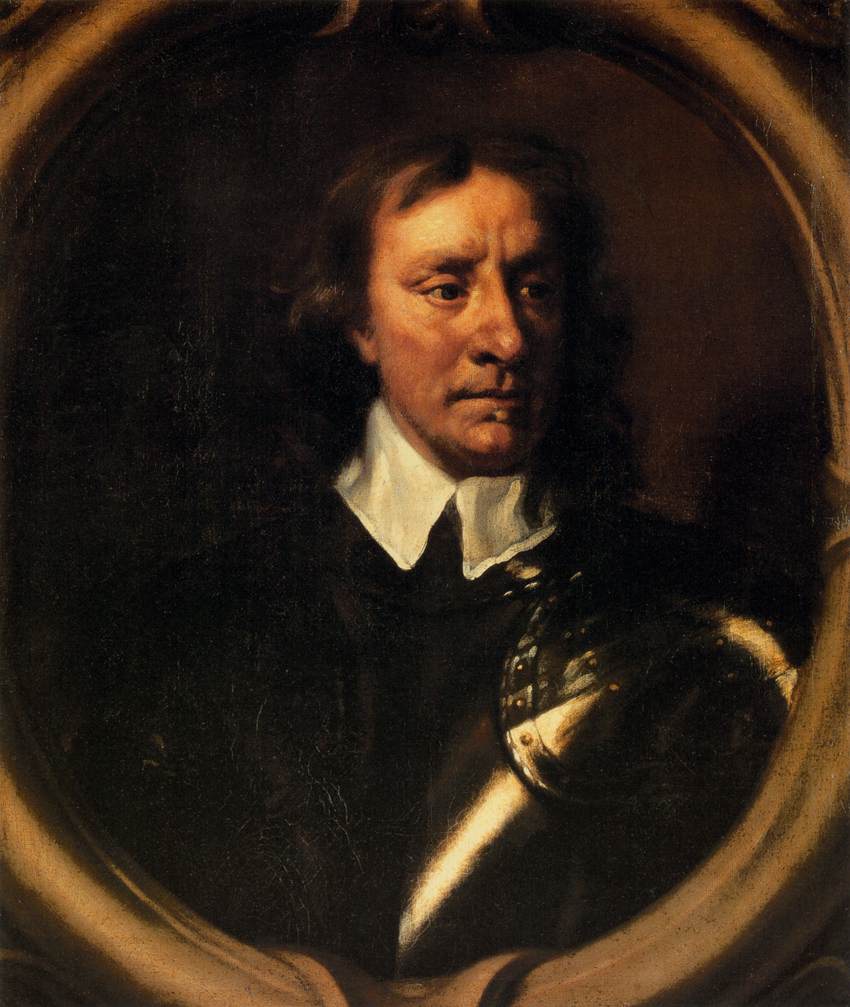
Admiral Nelson's mistress, Emma, Lady Hamilton, first came to public notice after agreeing to do it several times. When Oliver Cromwell did it, he didn’t even hope to conceal his warts. And President Franklin D. Roosevelt suffered a fatal cerebral hemorrhage while doing it.

Though a care-worn Marie Antoinette sat for artist Alexander Kucharsky in 1791, only her head was completed, while her clothing remains unfinished.


I’m talking about sitting for a portrait.

In the days before photography—and even after it, in Roosevelt’s case—it was customary to “sit” for an artist. Since only people of consequence could afford to have their portraits painted by artists of note, both the subject and the artist tried to keep the sitting time to a minimum. It was customary for artists to sketch or paint a subject’s face from life, but to use a body double when painting in the rest of the body—or just to hand the work off to an apprentice once the head was finished. (Many studios employed artists who specialized in "drapery," or painting the lavish folds of a subject's clothes.) Even with this concession to practicality, however, subjects were required to sit for hours at a time over a period of days or even weeks.

Bad skin, spindly calves, wrinkles, a bald spot? Any artist who hoped to enjoy the patronage of the great knew enough to overlook such flaws. Occasionally this artistic license could cause problems.

Though Oliver Cromwell insisted on having his warts painted by artist Peter Lely, his one concession to vanity was choosing to be painted in the armor of a military leader.

Contemplating marriage to Anne of Cleves, Henry VIII sent the artist Hans Holbein to paint her portrait. After seeing the finished likeness, Henry agreed to the wedding—but when the real Anne presented herself, Henry was so bitterly disappointed, he dubbed her “The Flanders Mare” and quickly had the marriage annulled.

(Though it was common practice for artists to flatter their subjects, one notable exception occurred when Oliver Cromwell had his portrait painted by the artist Peter Lely. As a good Puritan, Cromwell eschewed vanity. He was famous for instructing Lely, “use all your skill to paint my picture truly like me, and not flatter me at all; but remark all these roughnesses, pimples, warts and everything as you see me, otherwise I will never pay a farthing for it”—an instruction that has come down to us in the more colloquial expression “warts and all.”)

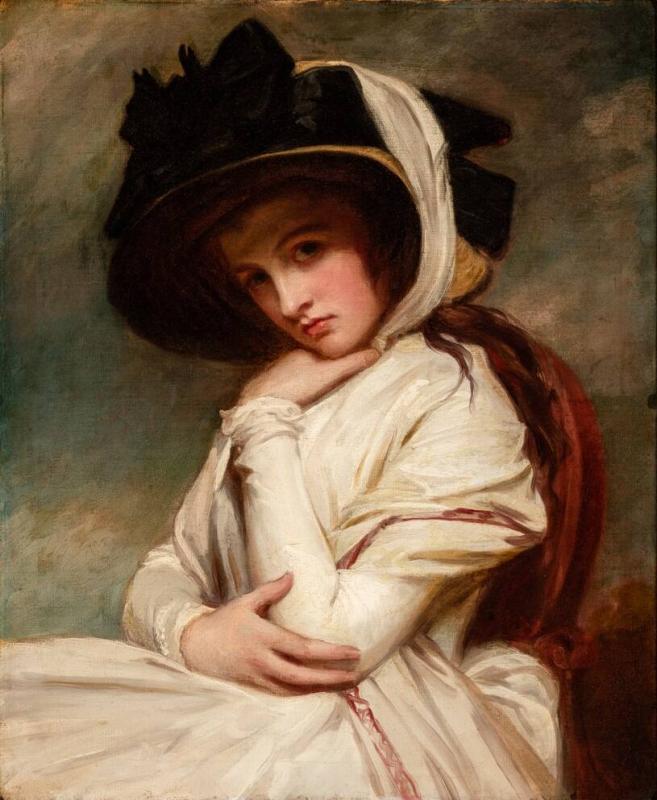
George Romney's 1785 Emma Hart in a Straw Hat was among the many portraits of the beauty that helped to make her famous.


But a good portrait painter and the right subject could make magic together. In 1782, Charles Greville sent his mistress, then using the name Emma Hart, to sit for the artist George Romney. By all accounts Emma was both beautiful and charming, and Romney was so taken with her that she became his muse. He developed a lasting obsession with her, continuing to sketch and paint her all his life. Romney's paintings made Emma so famous that when Greville needed to distance himself from her in order to marry a young heiress, he had no trouble convincing his uncle, the British envoy to Naples, to take Emma on. The uncle not only made the cast-off Emma his hostess, he made her his wife. She married Sir William Hamilton in 1791, and it was as Lady Hamilton that Emma nursed Admiral Horatio Nelson back to health seven years later after the Battle of the Nile, kicking off one of history's great love affairs.

Nowadays, thanks to photography it takes only seconds to create a perfect likeness. But while sitting for a portrait took far longer in the past, the hours involved meant that the artist often came to know his subject far better than most modern photographers do. While the best portrait artists painted out superficial flaws, they managed at the same time to capture the essence of their subjects' personalities.

Alyssa EverettAlyssa Everett's debut regency romance, Ruined by Rumor, is currently available from Carina Press, and her second regency will be out in March of 2013. She hopes you'll visit her website and follow her on Twitter and Facebook, where she promises not to spam you relentlessly.

Friday, February 03, 2012

Where are the REAL stories?


As you probably know (or may not!) I run a review blog called "Speak Its Name" which aims to list (and one day--hollow laugh) have reviewed all the gay historical fiction that there is out there.

It's a growing and healthy genre, from the handful of authors who were writing it when the blog started in 2007, there are now going on 100 authors who have tried it or are regular authors. There are books from just about every era now (if not every country) from (believe it or not) cavemen to the cut-off period which I cheekily upped from the Historical Novel Society's cut-off of "50 years ago" to "pre-Stonewall/Wolfenden report" which takes it all the way up to 1971.

But the interesting thing is, is that though there is a positive deluge of the stuff and most of it is good, nearly all of it concerns original characters having adventures in a past time.

Now, there's nothing wrong with that of course, but it surprises  me that--with the wealth of real-life gay men scattered throughout history, that there's not more stories regarding them. After all, much of the backbone of historical novels can set itself against the books of Jean Plaidy and the like when people wrote about the mildly fictionalised lives of kings and queens. I was raised on these books and I say: Where are gay equivalents? Why aren't people writing about all these fascinating people who managed to be gay--some notoriously so?

Of course, there are exceptions. If you persue "The Lists" (print/ebook, ebook only) you will find a smattering of "real life" characters. Some of course lean heavily on supposition. William Shakespeare is a popular subject. It seems that no original gay character can enter Tudor London without getting ambushed by either the Bard of Avon or the naughty Mr Kit Marlowe. Oscar Wilde is also a popular chappie, and there are quite a few books about him, although many (such as the series by Gyles Brandreth) are alternative history, where Wilde becomes a sleuth.


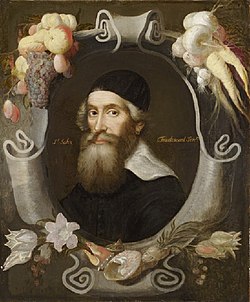
Philipa Gregory even dipped her toes in gay historical fiction. Her "Earthly Joys" is about the famous gardener John Tradescant the Elder who (in her book) ends up falling for the betwitching First Duke of Buckingham who was almost certainly bisexual and King James I's favourite. However attractive this book is--and I thoroughly enjoyed it, I had to stretch my imagination to breaking point to believe that the handsome Buckingham would have been even mildly attracted to Tradescant. But who knows? Perhaps he really was.
First Duke of Buckingham
George Villiers - First Duke of Buckingham
 
Tradescant
John Tradescant - not as handsome as Phillipa Gregory would have you think!

However - what I'd like to see is some damned good novels about real people going through times that we knew actually happened. The trouble is that there's so much been lost. Families who destroyed letters and diaries that would incriminate their sons as to their sexual preferences. People like Byron whose diaries were burned by order of his publisher. Oh! The loss of what they must have held! But there is a fair amount of information about gay characters--and more books are being written yearly (see the non-fiction section of The List) so if someone were to write something about Nijinsky and Diaghilev (why oh why hasn't someone done this already?) or Michelangelo - I'd certainly be standing in eager line waiting to snap them up. I do know an author who is working on a labour of love regarding Ivan the Terrible and his boy toy, but goodness knows when that will get done, (although it's going to be fabulous, I know!)

I mean, look at the Douglases. By that I mean Bosie and his brother. As far as I know (please please correct me if I'm wrong) but there's no book with an account of Bosie's experiences. And as for his brother? It's almost unknown that Francis Douglas who was older than Bosie, was somehow entangled with his boss, The Duke of Rosebery and a near-scandal ensued. Francis was granted a title by Rosebery and only 18 months afterwards (was it a pay off perhaps?) Francis was killed in a "hunting accident" although whether it was suicide, accident or something darker (seeing as how Rosebery was married into the Rothchild family...) Yes yes, supposition, but it's far less Wilde (excuse the pun) than Oscar as a detective!

Those devilishly handsome Douglas Boys (Bosie, left, Francis, Right.)
The Douglas Brothers, left-Bosie, Right, Francis


And when you think about it, one suddenly has a glimmer of sympathy (perhaps) for Lord Queensbury whose two sons were both involved with powerful older men. No wonder he went ballistic when Bosie went the same way.

Anyway - come on, authors! Where are the books about E M Forster? Wagner and Mad Ludwig? Siegfried Sasson? Clifton Webb? There are hundreds of subjects to choose from and only a handful of existing books. It's not right.

And if you don't, I may have to do it myself.

Further reading: Queers in History | Rictor Norton | Famous and Gay | List of Gay Men throughout History

Erastes is the penname of a female author living in Norfolk, England with 3 cats and a mad dog. She writes gay historical novels and short stories with gay themes from many genres. Her two books for Carina are: Muffled Drum (Austro-Prussian War) and A Brush with Darkness (coming out in March, which is set in 19th century Florence) Her website is www.erastes.com and she can be found easily on Twitter and just about everywhere else.

Thursday, January 12, 2012

A New Year and a New Release!

Happy New Year everyone!  2012 is starting out with a bang for me. On January 30th, Mask of the Gladiator, my novella set in ancient Rome will be released. In honor of this momentous occasion, I’ve pulled together a few fun historical New Years facts for your reading pleasure. So grab a noisemaker and raise a glass of champagne to New Years and new books!
Are you still lamenting that at the stroke of midnight you did nothing more than watch the ball drop on TV? Well, if you were living in early ancient Rome, you’d still have time to plan a big bash since New Year fell on March 1st.  The move to January 1st didn’t take place until 46B.C. when Julius Caesar introduced a new solar-based calendar.  While his calendar solved a number of time-based math problems which led to date drift, it didn’t solve them all. One day, this would lead to Britain being out of whack with the rest of Europe but more about that later.

Speaking of moveable celebrations, Wep-renpet was Ancient Egypt's New Year.  The feast date was calculated based on the rising of the star Sirius and the annual flooding of the Nile and could vary from year to year. Judging from tomb paintings and a few choice papyri passages, it seems the Egyptians rang in the New Year by partying like it was 1999 B.C.
While on the subject of parties, people in the Middle Ages partied like it was 999. January 1st marked the Feast of the Circumcision which the common people celebrated as the Feast of Fools. During this celebration, which had its roots in the old Roman Saturnalia, people mocked the church by appointing a Lord of Misrule and behaving very badly. The Parisians were the worst behaved of all, and because of them, the annual celebration was banned in 1451. Is it any wonder New Years is so closely linked with champagne?

And, like the year, we come full circle back to the Julian calendar.  At one time, Britain marked the New Year in March while the rest of Europe pulled out the party hats on January 1st.  The disparity began in 1582 when the protestant Henry VIII refused to switch to the newly updated, fresh off the Guttenberg printing presses Gregorian calendar.  This decision, coupled with date drift, resulted in the New Year falling in March. Realizing it was no fun partying alone, Britain finally relented and adopted the Gregorian calendar in 1751.  
I hope you enjoyed this brief trip through historic New Year celebrations. While you’re opening and hanging up your new calendars, don’t forget to mark the January 30th release of Mask of the Gladiator. Until then, have a great January everyone!

Friday, October 14, 2011

For Better or For Worse.

My family is celebrating a wedding this weekend. No, it isn’t mine. I’ve been happily married for some time. However, I must admit that when I accompanied the bride-to-be to David’s Bridal, I almost tried on the Kate Middleton wedding gown replica. Despite my enthusiasm for royalty, Reader, I resisted.

In honor of this momentous family occasion, I present you with some fun historic wedding trivia.

Let’s begin at the beginning.
The word wedding, according to Women in the Middle Ages by Frances and Joseph Gies, originated from the Old English word wed, which meant pledge and referred to the ring and money a groom gave to his bride at the church door.

How do I love thee? Let me beat it into you.
One notable historic proposal is William the Conqueror’s proposal to Matilda of Flanders. He approached her father, Baldwin V about the marriage and Baldwin readily agreed. When someone finally told Matilda about it, she said “No.” Not a man to let little things like being a bastard or “no” stop him, William rode to Flanders. He intercepted Matilda on the way to church, pulled her from her horse and, according to some sources, beat her. Amazingly, after this oh so romantic proposal, she agreed to marry him. Bruises heal, but a diamond is forever.

Speaking of diamonds.
The Krupp Diamond, weighing in at a whopping 33.19 carats, was purchased by Richard Burton for Elizabeth Taylor in 1968. It was her favorite ring and the most valuable one in her collection. For a mere $2 – 3 million you can own it too when Christie’s auctions it off in December.

If anyone has just cause why these two people should not be married…
After the invention of the telegraph, distance became no barrier to marriage and the first “on-line” weddings were performed.  In 1876, William Storey was a telegraph operator stationed at the remote Camp Grant in Arizona where there were no ministers. His bride, Clara Choate lived in San Diego where there were plenty of ministers to perform the wedding service.  Unfortunately, William could not get a leave of absence to travel to America’s Finest City. His solution? Bring the bride to Camp Grant and have a minister in San Diego marry them over the telegraph. The plan worked, with the minister reading the vows which were transmitted by telegraph to the bride and groom who wired back their responses. The wedding was legal and the technologically advanced couple lived happily ever after.

Remembering the big day or Photoshop the Bonaparte way.
Napoleon’s mother, Maria Letizia refused to attend the coronation of Napoleon and Josephine due to her dislike of the future empress. As a result, when Jacques-Louis David created his massive painting to commemorate the day, he simply added the old gal in. Although not strictly a wedding, a marriage did take place in the early hours of the coronation day. Napoleon and Josephine had originally been married in a civil ceremony that was not recognized by the Catholic Church, thus preventing her from being crowned alongside Napoleon. To sidestep this problem, a second religious ceremony was performed in the wee hours of the coronation day. My guess is, Napoleon’s mother didn’t attend that ceremony either.

And don’t forget, if at first you don’t succeed…
One can’t discuss historic weddings without mentioning Henry VIII. The eternal optimist, he married six times but only two of his wives were lucky enough to outlive him. His last wife, Catherine Parr mourned her chubby hubby for only a few months before marrying Thomas Seymour, the man she’d been forced to give up for the King. Thomas was her fourth husband.  Here’s to never giving up on love!

Wednesday, September 14, 2011

And suddenly, we didn’t have electricity.

I love history. I love reading about history and writing about it but I especially love not living in it. Yes, there is something intriguing and enchanting about manners and manor houses, balls, beaus and brave knights. There is also something equally glorious about indoor plumbing and modern medicine.  However, once in a while I wonder what it would be like to live as my ancestors did in a time before electric lights or penicillin. Would I survive as a pioneer woman or a medieval peasant, or would an infected hangnail get the better of me?
For one brief afternoon last week, I experienced what it would be like to live in a world without electricity. It wasn’t just my house or my neighborhood, but all of San Diego, parts of Orange County, Arizona and Mexico were without power.  The first things to go were the air conditioning and fans. Like my ancestors, the only way to keep cool was to open the windows and pray for a breeze. While I was sweating, I thought of all the time I had to write, especially without the distraction of the internet. That time lasted for about one hour and forty-five minutes before the laptop battery died and I had to switch to pen and paper.  One advantage my ancestors had over me was penmanship. I’m still trying to decipher a few lines of dialogue I scribbled.
Dinner proved to be the next challenge, and in this realm, as in penmanship, I’m sure my ancestors could beat me, assuming it wasn’t a famine year.  Since I have electric appliances, I couldn’t cook and there was nowhere to go to get food, nor anyone to call who could bring food to us.  Sure, we could have barbequed but I hadn’t exactly planned for a massive power outage so nothing was defrosted. We ate sandwiches for dinner.  Score one for my pioneering spirit.
Like my ancestors, I found sundown a challenge. While the sun was up, life was easy, but once it started to get dark, I ran around trying to accomplish all the things darkness would make difficult, like finding enough batteries and flashlights for everyone. Then the sun went down and we marveled at how dark the city was below us and wondered why there were still so many people on the freeway.  We did some star gazing and then called it an early night. I suppose my ancestors would have done the same thing, assuming they weren’t in front of a reed lamp sewing shirts for pennies.
I learned a few things from the experience. Nothing profound but fun nonetheless. One, my ancestors would probably have eaten something better than PB&J for dinner. Two, I need a new battery for my laptop. And three, I still love reading and writing about history but I’m very, very glad I don’t live in it.

Sunday, August 14, 2011

If at first you don’t succeed…do some more research.

Anyone who writes historical romances knows how much research can go into developing and creating a story. Since I am a voracious nonfiction history reader, this is one of my favorite parts of the process, but it can be tough. History in broad strokes is easy to discover. It’s the small details of daily life that can be elusive.  Sometimes I can find the details, other times I have to take some artistic license based on my knowledge of the period. And then there are times when, despite my research, my careful fact checking, I still manage to get it wrong
I was recently editing my manuscript for Mask of the Gladiator, my ancient Rome novella, and double checking my facts when I discovered I had made not one, but many mistakes.  I would read a sentence and something about it didn’t seem right. Off to the internet or a research book I would go, only to find out it was incorrect. Then I’d ask myself, “How did I miss this during the umpteenth times I’ve read this story?” or “I know I looked this up before. How did I get it so wrong?”
Since catching mistakes and making changes is part of the editing process, I can’t be too hard on myself. Also, after listening to a recent interview with Pulitzer Prize winning author and historian David McCullough, I know I’m not alone. When asked about his research methods, he admitted that he continues researching right through the copyediting process. I breathed a sigh of relief when I heard this. If a noted historian of his stature can keep researching until the last minute, then so can I. After all, in the end it doesn’t matter when you get it right, as long as you do.