Showing posts with label Eliza Knight. Show all posts

Tuesday, April 09, 2013

A Weekend In Washington D.C.

This past weekend my husband and I spent two days in Washington D.C. We took the train from Newark, N.J. and stayed at the Willard Hotel, an old world hotel filled with history that's next door to the White House.

Built in 1846, it has hosted every president since Franklin Pierce. Some of the historic incidents include:

Amid the history, we had a great time. While the cherry blossoms were a week late this year the weather was wonderful during the day. We walked through several museums and saw works of some our favorite artists.

Saturday night we had dinner with Eliza Knight and her husband. It was great spending some time together and catching up on family, mutual friends, books, and writing. It was a wonderful weekend.

Wednesday, July 25, 2012

The Regency Social Ladder

During the Regency era (and prior to...and after) there was strict social ladder upon which one fell. It was hard to climb said ladder, but quite easy to slip and fall for some. Typically you were born into your situation. A royal was born a royal, unless they happened to be lucky enough to marry into royalty. Same went for the aristocracy. It could be slightly possible for someone to raise themselves to gentry level by providing excellent service to the monarch, thus being awarded a title and perhaps a substantial piece of land. The best way to climb the social ladder was obviously marrying into it. The second way was to accumulate wealth, which could be difficult to do in a society with strict rigid order.

The Ladder:


  • Monarch -- At the time of the Regency, the King was unable to rule and so his son, the Price Regent ruled in his stead.
  • Royals -- Family members of the monarch who were in line for the throne, some quite removed.
  • Aristocracy -- These are the nobles.
  • Gentry -- These are high-born people, land-holders, lower aristocracy, a knight and his family.
  • Middle Class -- although this term wasn't used until later, it referred to professionals such as bankers, physicians, lawyers, wealthy merchants, etc...
  • Artisans and Tradespeople -- This is a group of skilled workers, highly trained in a specific trade, and while some could make a pretty living, most did not. These were often mantua makers, watchmakers, dress makers, etc...
  • Servants -- Servants worked for not only for nobles and gentry, but for the middle class as well. They included butlers, housekeepers, maids, cooks, stable workers, etc... They did not make very much money and were often provided quarters within the household they worked for. Wages among servants varied widely depending mostly on your position and who you worked for. A butler for an earl would make substantially more than a butler for a banker--and within themselves, the earl's butler would feel he was at a more elevated position than that of the banker's butler.
  • Laborers -- Laborers had a particularly hard life. They worked themselves to the bone for very little coin. We're talking peddlers--the gal who sells oranges or flowers, the oyster collector, chimney sweeps, factory workers, street cleaners, etc...
  • Paupers -- Paupers either had no work or found only occasional/seasonal work. They were the destitute, with nothing to their names and growling bellies. They often fell to crime, prostitution, and even died at an earlier age from exposure, illness or the dangers of living on the streets.
I admit to being fascinated by all social classes, but if I had to choose one to belong to, I think it would be gentry. Don't get me wrong, I would love to be a Queen or a Duchess, but the rules of society were too strict and confining. As a member of the gentry, I'd still have access to mostly the same things, but perhaps I could live a more "normal" life. Maybe...

Eliza Knight is the best-selling, award-winning, multi-published author of sizzling historical romance and erotic romance. While not reading, writing or researching for her latest book, she chases after her three children. In her spare time (if there is such a thing…) she likes daydreaming, wine-tasting, traveling, hiking, staring at the stars, watching movies, shopping and visiting with family and friends. She lives atop a small mountain, and enjoys cold winter nights when she can curl up in front of a roaring fire with her own knight in shining armor. Visit Eliza atwww.elizaknight.com or her historical blog History Undressed: www.historyundressed.com Twitter:@ElizaKnight and Facebook: https://www.facebook.com/elizaknightauthor

Friday, May 25, 2012

The Importance of Scenery

Scenery is not only important in a story for your reader to "see" the setting of the book, but its also important for writers to be able to see that scene vividly in their minds. Obviously as writers we might have a grand imagination and most of the time can picture our settings in our minds. But I really love to get visuals on settings. It helps me to not only put myself in that scene, but to get a sense for everything that might be happening--the temperature, the weather, the scents, the surroundings, and also a real live picture can really get the mind working creatively.

Recently, we took a trip to the Smoky Mountains and went hiking at a botanical gardens. It was different than any other garden I'd been too--it was just all natural greenery. I took tons of pics because even though I write in historical European settings a lot of the places I saw were bringing my own story ideas to life.

My advice--if you pass something in your daily travels that you think would be a great setting for your book, take a picture.

This reminded me of  a road that my characters might ride on in a carriage or by horseback.


Perhaps a cave where characters might seek shelter from the rain.


Took this in the car, I just couldn't resist the rolling hills and water.


Doesn't this bridge bring all sorts of scenes to mind?


A babbling brook my character might stop to drink at.


Saturday, February 25, 2012

Basic Regency Etiquette

With every society, culture, era, there are certain rules of etiquette, and the Regency was no exception. Today I'd like to give you a few basic rulse of etiquette that I've recenlty been reading in, What Jane Austen Ate and Charles Dickes Knew by Daniel Pool--literally a must have for lovers of the Regency! I have of course added my own commentary.

A Gentleman's Rules of Etiquettte:

  1. If passing a lady--whom you are only slightly acquaitned with--while out in about in town or at the park, do not tip your hat unless hse first acknowledges you. Do not speak to her unless spoken to. Boy, this certainly does give a woman a chance to issue the cut direct, does it not?
  2. Going up the stairs--men first. Going down stairs--ladies first. Hmm... I would have thought the opposite, so said gentleman could catch her when her corset-wearing-short-breaths cause her to faint from the exertion.
  3. When riding in a carriage with a lady who is not your wife, sister, mother or daughter--do not sit next to her! Also be sure that you are sitting in the seat facing backward. Also, take care not to step on her dress. I do like to break the rules and have my ladies sit directly next to her unmarried beaus--and have their limbs touch.
  4. A gentleman never smokes in the presence of ladies. Wish this rule were true today!

And now, A Lady's Rules of Etiquette:

  1. If a lady is under the age of thirty and/or unmarried, she should never be alone with a man she is not related to without a chaperone--unless of course he is escorting her to church or the park early in the morning.  I can imagine many a lady confessing her sins once she arrives at church.
  2. Never wear pearls or diamonds in the morning! How obscene to seen doing such! I wonder if emeralds, rubies and sapphires are acceptable?
  3. Never dance more than three times with the same gentleman at a party. I love to break this rule too!
  4. Do not give someone the cut direct unless absolutely necessary, and when you do, make sure it is with an icey stared, perhaps even a stiff bow. Ooh, I can see many a lady doing this to some handsome, yet thoroughly rakish men.
Do you have any Regency rules of etiquette you care to share?

Cheers,
Eliza

Eliza Knight is the multi-published, award-winning author of sizzling historical romance and erotic romance. While not reading, writing or researching for her latest book, she chases after her three children. In her spare time (if there is such a thing…) she likes daydreaming, wine-tasting, traveling, hiking, staring at the stars, watching movies, shopping and visiting with family and friends. She lives atop a small mountain, and enjoys cold winter nights when she can curl up in front of a roaring fire with her own knight in shining armor. She writes Regency erotic romance for Carina Press. Visit Eliza at www.elizaknight.com or her historical blog, History Undressed, which was recently mentioned in a feature article in The Wall Street Journal. www.historyundressed.com

Wednesday, January 25, 2012

Special Valentine's Day Continuation of LADY SEDUCTRESS'S BALL

Valentine’s Day is 20 days away… Ah!!! That leaves less than three weeks to prepare!  Chocolates, flowers… a special date!  But what if you lived in Regency times? What would you do then? Today I give you a special treat… A short continuation of LADY SEDUCTRESS’S BALL--Tristan and Olivia celebrate Valentine’s Day together for the first time since exchanging vows…


Oliva sat upon the satin embroidered chase, Tristan had purchased for her bedroom, and stared out the window at another somber winter day. Snow covered the grounds nearly a foot deep, and ice crystals dripped in frozen lines along the branches of the trees at Knightley Manor. They hadn’t been able to go outside for nearly three days and she was beginning to grow antsy.

Tristan was in his office working on paperwork, and she’d lazily slept in, with nothing better to do.

She leaned her head back on the chaise. What day was it? How long until spring? She yearned to go out in the sun.

With the realization of what day it was came another revelation—tomorrow was St. Valentine ’s Day.

She bit her lip and drew her brows together. Did Tristan celebrate St. Valentine ’s Day?

Oh, what did it matter? They could start a new tradition, and she certainly needed a distraction from the ensuing boredom of remaining indoors while her husband worked. Not that their nights were boring—they were anything but. Passion filled Knightley Manor when the sun went down. Tristan knew exactly how to make her scream with delight, writhe with pleasure.

But the days were reserved for his work, and anything she might care to do. Away from the city, left little on the list when a foot of snow covered the grounds.

She alighted from the chaise and dug around in her trunk of ribbons and bobbles. She would make him a card, and she’d plan a lovely dinner. Could she entice him to come out of his study for the day? She nibbled the tip of her finger. It was worth a try!

Taking the ribbons and beads with her, she left her chamber in search of their housekeeper. It was time to seduce her husband away from his work!

*****

The following day, mid-morning…

Tristan leaned back in his leather arm-chair, seriously considering tossing every bit of correspondence into the fire. He did not want to be working. He wanted to be in the arms of his Olivia—the woman he still could not believe was his wife. He was a lucky man. Fate had seen to that.

A whisper of paper caught his attention. What was that? He leaned forward, looking around his desk. Had something fallen? His gaze fixed on a colorful beribboned paper in front of his library door. Someone had slipped it underneath.

“What in Hades?” He stood from his desk and marched over to pick up the creation.

Olivia’s jasmine and vanilla scented perfume wafted from the paper. Ribbons tied in bows with little bobbles dangling from their ends edged the sides.

Written on the center was this…

The rose is red, the violet's blue
The honey's sweet, and so are you
Thou are my love and I am thine
I drew thee to my Valentine
The lot was cast and then I drew
And Fortune said it shou'd be you

~Gammer Gurton's Garland (1784):

A smile instantly etched his face. He wrenched open the door expecting to see Olivia standing on the other side, an impish smile on her face, but there was no one there. But there was another note…

Meet me in the drawing room…

He sucked in his breath. His wife had planned a seduction! His blood raged through his veins, and elation filled him. If anyone had ever told him he would be this in love, he would have laughed in their faces. With quick steps, he made his way to the drawing room.

But instead of Olivia, there was another note beside two glasses of champagne, almonds dusted with cocoa and sugar and his favorite honey cakes. He picked up the note.

My love,

Do you know what day it is? It is the day of love—St. Valentine’s Day. Today we celebrate our love. Partake in the champange and treats while you wait in our special spot.
 
Your ever-loving wife,
Olivia

Their special spot?

Tristan racked his brain… Then he knew exactly where she wanted him. He sat down on the chaise longue. Took a long sip of bubbly champagne and waited. Within minutes, Olivia crept into the room. She wore a silk wrap, and her hair was down around her shoulders just the way he liked.

“My seductress has arrived,” Tristan drawled. He leaned back, his gaze raking over her.

Mais oui, and I plan to show you on this special day exactly how much I love you, in the very spot we made love for the first time as man and wife.”

Slowly she untied the length of silken cord and let the wrap drop in a pool around her feet. Tristan thought his heart might stop beating. She wore a knee-length nightrail made of light pink lace and silk—more lace than anything. Her flesh peeked through the lace, teasing him, igniting his ardor.

He blinked. Swallowed. Then beckoned her to come to him. Olivia took dainty steps, her hips swaying enticingly.

“Happy Valentine’s Day…” Tristan said slowly as he slid his hands up her bare thighs.

“Oh, my love… You have made my life complete.” Olivia sank onto Tristan’s lap, her thighs straddling his hips.

Their gazes locked for several moments as emotions and desire heightened, thickening the air. But he could wait no longer. He claimed her lips in a searing kiss, his tongue gliding inside to taste the sweetness of her mouth.

And I leave the rest to your naughty imaginations J

*****

Eliza Knight is the multi-published, award-winning author of sizzling historical romance and erotic romance. While not reading, writing or researching for her latest book, she chases after her three children. In her spare time (if there is such a thing…) she likes daydreaming, wine-tasting, traveling, hiking, staring at the stars, watching movies, shopping and visiting with family and friends. She lives atop a small mountain, and enjoys cold winter nights when she can curl up in front of a roaring fire with her own knight in shining armor. Visit Eliza at www.elizaknight.com or her historical blog, History Undressed, which was recently mentioned in a feature article in The Wall Street Journal. www.historyundressed.blogspot.com

Invitation to Pleasure

As the wife of the elderly Earl of March, Olivia Covington has never known the intimacies of the bedroom. Though her curiosity is piqued by the shocking whispers of society ladies, she is too wary of causing scandal to indulge in an affair. But Tristan Knightley, Earl of Newcastle, tempts her to throw off propriety.

Tristan wants Olivia for his own, and has sworn off all others until he can rid himself of the obsession. He is sure once he has a taste, he will tire of her, and can return to his rakish existence. Unable to wait to have her in his bed, he invites her for a tryst at Lady Seductress's Ball...

24,000 words

Available now at Amazon, Barnes and Noble, Carina Press and other e-tailers.


Friday, November 25, 2011

Regency Weddings

I hope all of the US readers of Romancing the Past had a lovely Thanksgiving yesterday! Hopefully, you aren't too full and still lying on the couch...

What are you thankful for? I'm thankful for my family, friends, my health, my career, and of course that my Regency romance, LADY SEDUCTRESS'S BALL releases next month with Carina Press--right in time for the holidays! December 19th is the day!

In LADY SEDUCTRESS'S BALL, my heroine, Olivia is married... but *gasp* not to the hero! Unfortunately, for the lovely Olivia, her parents forced her into marriage to a MUCH MUCH MUCH older man, and she has fallen for the dashing, rogue, Tristan Knightley... but as in all romance, there must be a happy ending right? A wedding perhaps? Well, I can't tell you that! You'll have to read it to find out how Olivia gets her happy ending (double entendre intended *winks*)

Regency Weddings
During the Regency, weddings became mostly private affairs, and  if held at church (and not in the family drawin room) was not attended by that many. The lovely bride would be attended by her younger unmarried sisters or cousins, perhaps a dear family friend. The groom would also have a best man--brother, dear friend, cousin. There was also the required witnesses, who on occaision were those very same attendents.

A very popular place to have a wedding in London was at St. George’s Church in Hanover Square. In fact, in 1816 there were 1063 weddings held that year in the church. According to the Hibiscus Sinesis website, with that many weddings in the year, it was a rival with a Las Vegas wedding chapel.

It was during the Regency-era that white wedding gowns began to stick. Wearing white was popular during that time anyway, as it showcased innocence and virtue, and most women were expected to exude these qualities.

Reading of the banns (the announcement of the wedding read in the couple's local church for three weeks in a row, and objections could be made, if none made, the wedding was a go) was still done in the Regency-era but there were also a couple of other ways you could go about it. There was the common license, which was obtained by a bishop or archbishop. The couple had to be married in a church or chapel where either the bride or groom had lived for four weeks. The third way was a special license, which was issued by the Archbishop of Canterbury or the Doctors Commons in London. The special license allowed the couple to marry anytime, anyplace.

Weddings were still done in the mornings, (majority from the Church of England Book of Common Prayer) and could be followed by a breakfast feast. The wedding itself would be announced in the papers (something many still do today).

After the breakfast, the couple would either go about their business as usual or leave for a honeymoon period abroad, perhaps to Bath in England or the countryside.  To be considered legit, the marriage must still be consummated.

Poor Olivia's first marriage was consummated, however ill-suited and dour her husband was for her, so annullment wasn't an option.
24 days until the release of LADY SEDUCTRESS'S BALL!!!

Don't forget to visit Romancing the Past starting in December for our special round-robin Christmas tale and prizes!

*~*~*~*

Invitation to Pleasure

As the wife of the elderly Earl of March, Olivia Covington has never known the intimacies of the bedroom. Though her curiosity is piqued by the shocking whispers of society ladies, she is too wary of causing scandal to indulge in an affair. But Tristan Knightley, Earl of Newcastle, tempts her to throw off propriety.

Tristan wants Olivia for his own, and has sworn off all others until he can rid himself of the obsession. He is sure once he has a taste, he will tire of her, and can return to his rakish existence. Unable to wait to have her in his bed, he invites her for a tryst at Lady Seductress's Ball...

Releasing December 19th!!!

24,000 words

Tuesday, October 25, 2011

Ten Reasons I Love the Regency Era

Hello folks!

The countdown is on! Unless my math is off, Lady Seductress's Ball, releases with Carina Press in 55 days!!!!  (Release date = December 19, 2011)

I am totally psyched about it. Lady Seductress's Ball is a Regency-era erotic romance novella, which is why I've chosen to write the ten reasons I love the Regency era, and in no particular order!

  • Men in tight breeches
  • Mr. Darcy--need I say more?
  • Proper ladies behaving badly
  • Riding horses in the park
  • Giving mothers a fit of the vapors
  • Sex in carriages
  • Broad shoulders and well muscled chests filling out the velvet fabric of an evening jacket
  • Parties nearly nightly
  • Gorgeous homes
  • Undies not required...
Tell me, why do you love the Regency era?

Cheers,
Eliza

*~*~*~*~*

Lady Seductress's Ball  -- Releasing December 19, 2011

As the wife of the elderly Earl of March, Olivia Covington has never known the intimacies of the bedroom. Though her curiosity is piqued by the shocking whispers of society ladies, she is too wary of causing scandal to indulge in an affair. But Tristan Knightley, Earl of Newcastle, tempts her to throw off propriety.Tristan wants Olivia for his own, and has sworn off all others until he can rid himself of the obsession. He is sure once he has a taste, he will tire of her, and can return to his rakish existence. Unable to wait to have her in his bed, he invites her for a tryst at Lady Seductress’s Ball...

Eliza Knight is the multi-published author of historical and erotic romance. Visit her at www.elizaknight.com. Friend her on FB, and Follow her on Twitter.

Sunday, September 25, 2011

Sexual Desire was Taboo

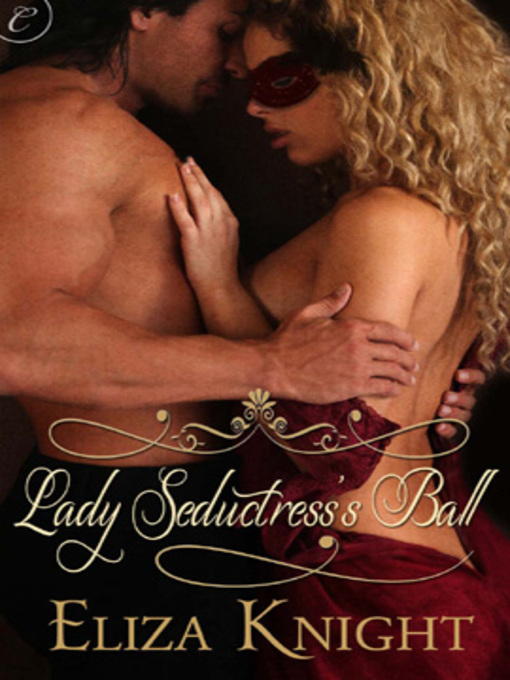
First of all, I got my cover for my upcoming Carina Press novella release, Lady Seductress's Ball! (Coming 12/19/11)  Isn't it fabulous?

In Lady \Seductress's Ball, the heroine, Olivia finds herself in a loveless, pleasureless marriage to a man three times her age. Her situation was not abnormal during a time when marriages were made for convenience, money, power, prestige, property. Because marriages were made based on contracts and not attraction and desire for your spouse, the bedroom could often be a cold and lonely place.

On top of that, women were taught that desire, pleasure were taboo. To want your partner was a sin, and only women with loose morals, and harlots had sex for pleasure. If men wanted to enjoy sex and have their partner return their sentiments, they sought out a courtesan or mistress. Wives were only available for breeding heirs. An awkward, coupling in the dark that was most often painful to a woman who was not properly prepared for the joining, and embarrassing in its quick, sudden and messiness. This would also be why often after a woman had an heir and the requisite spare, she would banish her husband from the bedroom.

Despite all this, Olivia does catch snippets here and there of women enjoying their lovers. She also feels and intense yearning for a man that is not her husband.  He promises her pleasure... Pleasure she should not want, as it makes her wicked, wanton. What will she do? Will she succumb to her own desires and the scintillating whispers of an earl--Tristan, the man she dreams of making love to?

If she were to do so, it could dash her entire reputation into the fire--and a lady's reputation meant everything to her.

Guess we'll find out in December...

Cheers,
Eliza

Thursday, August 25, 2011

Historical Language in Books

**Sorry for posting late, had kindergarten orientation all morning...**

Yesterday, my mother came to visit. Recently, she purchased one of my new releases, which happens to be a medieval.  She said it took her awhile to get the "language" of the story.  Contemporaries are her normal genre of choice, so to her it was a whole new world reading a medieval.

I'd never really thought about it before. I know when I'm writing, I do have my characters speak in a particular way, depending on era, sex, class, etc... But since I'm so engrained in history the majority of the time, I don't have to "get into the language" as she put it.

Now, luckily, after the first chapter, she fully understood the language and quickly sped through subsequent chapters.

Looking at the chapter, some of the words that were used that may be considered historical were: headdress, mayhap, border holding, Hadrian's Wall (a historical site), broke their fast, walls (as in the high walls surrounding the castle), keep (castle), etc... It was interesting to go through and see they words, and realize that to someone unused to seeing them, they might sound odd.

Question for writers: How do you write? I know for myself, my editors will say "sounds too modern" if I use a word or phrase that wasn't used in the era I'm writing. How do you keep your book "in character" so to speak, since the history truly is a main character.

Question for readers: Do you find the language confusing at times? Do you enjoy the historical language?

Can't wait to see your answers!

Cheers,
Eliza

Monday, July 25, 2011

Writing a Historical Romance -- The Process

Deciding to write a historical romance is not as easy as picking up a pen and pad or scooting your chair up to a computer.

Despite historical romances being dubbed, bodice rippers, a lot more goes into the writing than simply a lot of hot sex, and "Oh, my lord," and "Yes, my lady!"

Like any other fictional tale, a historical romance has to have a plot, a vibrant setting, larger than life characters with goals, motivations and conflicts. And on top of all that--you have to research your time period. A writer of historical fiction has to know their time period like they know the one they live in now--the setting, the clothing, the dialect, foods, mannerisms, etiquette, laws, ruling parties, transportation, phrases.

So if you've decided you want to write a historical romance, I suggest doing the following:

ONE: Pick a time period--and thoroughly research it. There are books you can purchase that will actually give you a good idea of what life was like in certain time periods. Beyond books there is the internet, reenactments you can go to, traveling to where you story takes place, talking to researchers and historians. Taking horseback riding, fencing, dancing lessons. Trying on historical clothing. Whatever it takes to get inside your period and your characters' heads to make the story more authentic.

For Regency, I like: What Jane Austen Knew and Charles Dickens Ate by Daniel Pool; Georgette Heyer's Regency World by Jennifer Kloeste.

For Elizabethan England: Elizabeth's London by Liza Picard.

For Medieval Times: Knight, by Christopher Gravett; Life in a Medieval Castle by Joseph and Frances Gies; Marriage and the Family in the Middle Ages, by Frances and Joesph Gies.

For all periods: Costume: 1066 to the Present by John Peacock.

I have TONS of other resources if you're looking for a certain time period, email me or leave a comment below.

TWO: Read fiction in that time period. The best way to learn about writing in a certain genre, is to READ in that genre. See how an author seamlessly weaves the history into the fictional prose. Also reading helps to widen our own vocabulary. 

THREE: Develop a plot -- what is your story? What is the purpose of your story? Why should the reader care? Come up with a good hook. If you're a plotter, this is where you loosely plot out the story. If you're a panster, this is where you loosely plot out the major points of the story--or at least where you hope to end up. Remember too, that in a romance, the focus of the story should be the relationship between the hero and heroine (or hero/hero, etc...). Show the progression of the romance so that it is believable to the reader. Make each scene meaningful, and in doing so, make sure that each scene moves the story along.

FOUR: Get to know your characters. You can't write a story--let alone the first paragraph of one, if you don't know your characters. How is the reader supposed to "get them", connect with them, empathise with them, if you don't? 

Great craft book resources I recommend:
  • On Writing, by Stephen King
  • On Writing Romance by Leigh Michaels
  • How to Write the Breakout Novel, by Donald Maass ----> I actually use his checklists at the back of each chapter for each book I write.
  • The Writer's Journey, by Christopher Vogler
  • Got High Concept? by Lori Wilde
  • Thesaurus/Dictionary -- these ARE your friends. Make sure you are not only using words correctly, but that you aren't using the SAME descriptive words OVER and OVER again. I like http://www.dictionary.com/ because it will also give you the etymology of a word so you know if it was used during your time period. http://www.thesaurus.com/ is also a keeper!
FIVE: Start writing. Don't forget to hook the reader in that very first sentence, that first page, that first chapter, and every page thereafter. Show don't Tell. Be active not passive.

SIX: Thought you were done? No... Just because you typed "The End" does not mean you are finished. Now you have to edit your story. I HIGHLY suggest having a critique partner or two or more take a look at your story. Having a fresh pair of eyes to catch mistakes you might not have seen is a plus. Also, they can give you feedback and insight on your scenes.

SEVEN: Once you are confident that the story is the best it can be, take the plunge and submit it!

Remember above all, writing a historical romance isn't throwing in a few historical phrases here and there, you actually need your story to be authentic from all angles. If we stripped the history out of your story, would there still be a story? The answer should be no--because the history is essentially one of the main characters.

Happy Writing!
Eliza

Eliza Knight is the multi-published author of sizzling historical romance and erotic romance. Most recently, she was featured in The Wall Street Journal as a self-styled expert on historical undergarments. Visit her at http://www.elizaknight.com/.

Coming 12/19/11 to Carina!  Lady Seductress's Ball (cover coming soon...)

Olivia has suffered a loveless marriage to an elderly invalid.  Never knowing pleasure, she wants to experience first hand the delights of lovemaking.  When a titillating invitation arrives to Lady Seductress’s Ball, the temptation is overwhelming.  Her thirst for pleasure could finally be quenched, and with a man she fiercely desires.
 
Tristan wants Olivia for his own, and has sworn off all others who clamber for a place in his bed.  After trying to seduce Olivia without success, he attempts one last amorous tryst—a night filled with passion, love and adventure, that will leave them both yearning for more.

Wednesday, May 25, 2011

Immersed in the Past

Eliza Knight -- Courtesy of
Katherine Brandon.
Picture taken by a 19th Century bridge
in Eliza's village.
This is my very first post on Romancing the Past! I am extremely excited to be part of this blog and the Carina Press author team! My Regency-set erotic novella, Lady Seductress's Ball, will release on December 19th this year. I don't have my cover yet--which I am soooo excited to see, I think that is one of my favorite parts of a book being published--and you all will be one of the first to see it!

If time-travel were possible, I'd be allllll over it... As it is however, I am stuck here in 2011 until it becomes 2012...an so on. But if you ask my husband, who regularly points out I am using historical words in modern speech, I do live in the past. I think my latest blunder was telling him about a merchant who'd just opened up shop in town... lol

Authors of historical fiction, have to know their setting, their characters mannerisms, the language, the style, EVERYTHING, just as authors of contemporary, and fantasy world-builders have to know theirs. The thing is, this is a world that no longer exists except in paintings, music, the pages of a books, and in reenactments (live or video-recorded such as documentaries, tv series and movies). We cannot make up the world in our head, because we aren't creating a  fantasy or sci-fi book, we have to actually study it and bring it back to life within our own stories.

Most of us haunt libraries, antique stores, and bookstores to add to our knowledge and collections. I've also started to download books that were written in the late 19th and early 20th century that have been scanned onto a computer and made into .pdf. Actually had a really cool find last night! I read a new research book on a character I'm working on and there was a portrait that was said to be her in the past, but has now been discovered to be someone else. I started last night reading a book I downloaded that was written in 1911--it had the portrait and labeled it as my character!  How amazing? I had just read about it being a mistake and to see it...okay, I'm gushing I know, I'm a nerd like that!

But beyond books, as historical authors--and esentially amateur researchers and historians--we have to find other ways to get inside our world. History Channel is one of my best friends :) I watch a lot of documentaries. Visiting museums and traveling to places your setting takes place in can be priceless.  Take a lot of notes, pictures and videos, pick the brains of the tour guide and buy a few artifacts, portraits, maps, books you can find there.

I love to go to festivals, fairs and historical villages. I feel at home there. I know a lot of authors who are also reenactors. I would love to do that, and when all my kids are older (youngest is a wee babe), I do believe I will.

In addition to visiting historical places, reading or watching about them, I also try to bring history into my life. I have historical artifacts in my home--paintings, knick-knacks, like the antique cannon balls that sit in a large medieval bowl on my piano, I love to mix it up! My children drink out of pewter goblets and don't bat an eyelash. I wear medieval and Regency fashioned jewelry.  I cook historical dishes. I listen to period music. I read historical novels. You could say I've immersed myself in the past, and that I live that way--minus the hygienic practices. I do love modern plumbing, deodarant and razors!

I also think part of history is nature. I love to hike in the woods, and walk across open pastures. To get away from modern society, not hear cars, or radios blaring. I don't want to see the warehouses, office buildings and shopping centers. I like to look around at the wide open space, breathe in the fresh air, look at the plants and wonder which herbs might have been picked to make a poultice, see a rut in the path and think about how a carriage wheel would have gotten stuck or even worse broken the carriage axel and the whole thing come tumbling down.

Does every writer of historical fiction have to live like the characters of the book? I don't think you need to do so every day, but if you really want to get inside their heads, make their world pop on the page, then yes, I encourage you to give it a shot, at least for a few hours!

I'd love to hear how you immerse yourself in your fictional world! 

Eliza Knight is a multi-published author of historical romance and erotic romance. She is the owner the blog, History Undressed, and well known for being obsessed with all things historical. http://www.elizaknight.com/